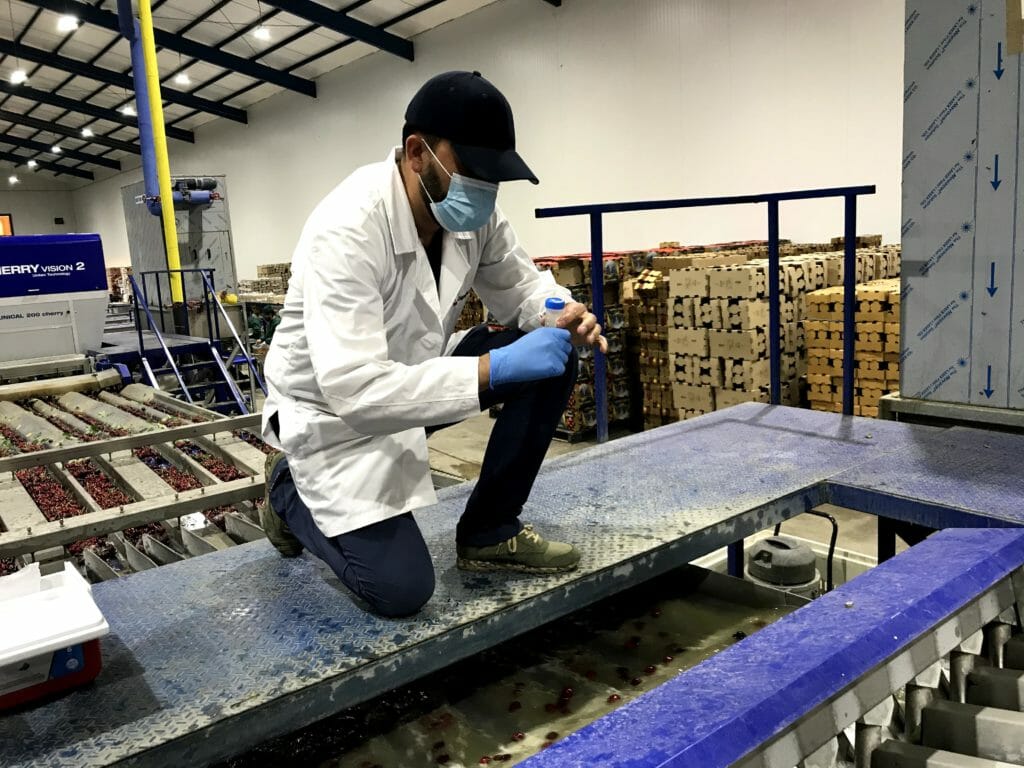
Diagnofruit highlights its process, implications and importance for fruit care.
Complicated batches combined with poor hygiene practices in the packing plant are the most common reasons for contamination in packing plants.
Therefore, it is extremely important to detect pathogenic microorganisms in packaging plants, since if the areas through which the fruit circulates are contaminated, the product could be infected, which could end up with the fruit being thrown away due to various types of rot.

To do this, there are various techniques for detecting these microorganisms. At Diagnofruit we have perfected those based on molecular biology, which are more precise and faster in their results.
The detection and quantification service can be carried out from water or dry surface samples, direct sampling from disinfection or transport pools or surface torulation of different dry sectors, considering packaging lines as well as refrigeration chambers, cooling tunnels, calibration machines, etc.
Once the sample arrives at the laboratory, the DNA extraction process of each sample received begins, followed by a quantification of specific pathogens using qPCR, with specific primers and probes that couple with high sensitivity and specificity to pathogens such as Botrytis, Alternaria, Penicillium either Monilinia.

In a season when fruit moves and sells quickly, problems with contamination can be hidden, and rot does not have time to develop. However, when the market stagnates and logistics collapse, this type of process control becomes indispensable and can make the difference between a successful sale and a loss.
These types of systems must be combined with chlorine, temperature, pH, fungicide injection and fruit residue controls; in addition, eventually, with monitoring through standard microbiological techniques, which could detect contamination beyond what the qPCR specifically reads.
In conclusion, the detection and quantification of pathogens allows for efficient microbiological control and management of the areas of the packing plant, which will allow the transportation of cleaner fruit and, therefore, with greater possibilities of arriving healthy and with high quality at its destination.