One of the most effective measures to reduce the negative effects of extreme weather events on fruits and vegetables is the use of covers. However, their application must be carried out with special care to avoid affecting the productive conditions of the protected crop.
Extreme or untimely weather events can negatively affect the covering systems, which is why it is essential to modify the conditions inside the cover in order to generate an environment with optimal temperature, relative humidity, evapotranspiration and wind parameters for the care of cherry trees.
In this sense, it must also be considered that, in particular, if humidity and temperature are excessive, a series of risks are created. First, it can lead to a lower quality of fruit to be harvested and also to the development of pathogens that in turn put the health of the orchard at risk. On the other hand, it enables the generation of "heat pockets" that cause stress and to which the plant reacts by closing its stomata. At the same time, these heat pockets They generate increases in relative humidity with levels above 60% which, combined with high temperatures and stomatal closure, produces a decrease in the flow of masses from the roots, trunk and peripheral areas (Stone et al, 2022).
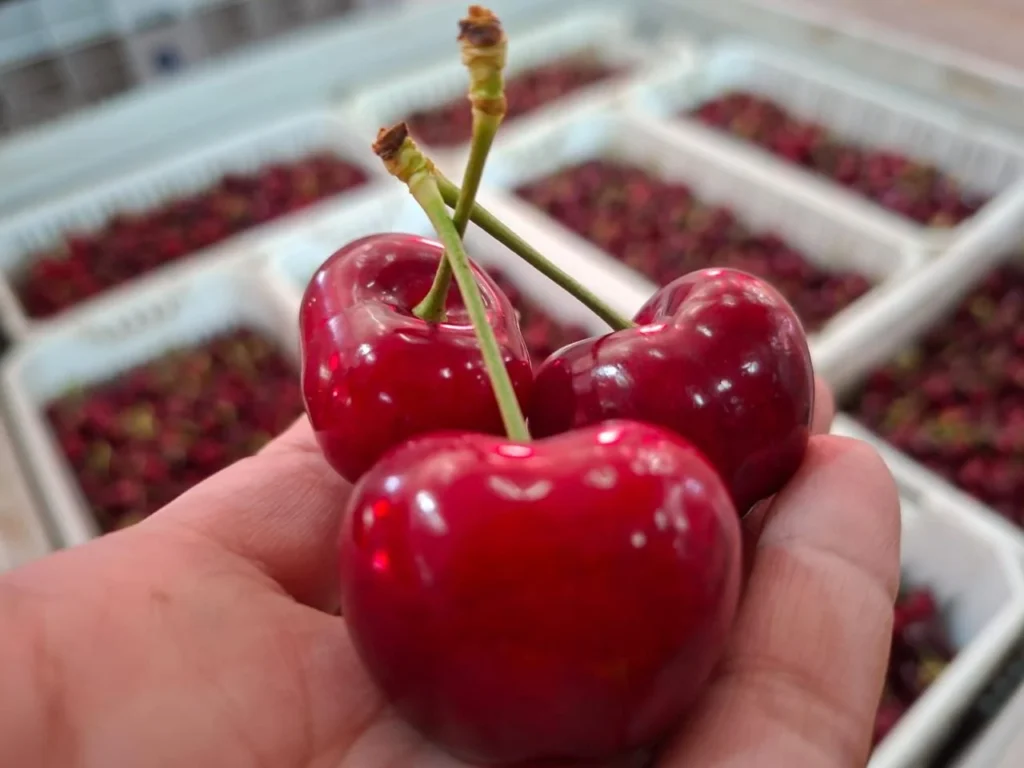
Calcium needs these sap movements, and is completely blocked, inhibiting the development of firm cell walls. As a consequence, the fruits are not able to fix calcium in the appropriate quantity, generating soft, low-quality fruits.
So how do you choose the right covers?
The first thing is to be absolutely clear about the climatic conditions of the garden's location, and to consider that even within the same country, for example, there may be microclimates and unexpected conditions.
Another point to consider has to do with agronomic parameters, planting frame, row spacing, height of trees or plants, planting orientation, irrigation sectors, etc.
As for the qualities that we should prioritize when choosing, we must know that not all covers are the same, so we must pay attention to the quality of light - diffused or direct, thermal, double-sided laminate, radiation composition, etc. Thus, its choice will depend on the needs and characteristics of the crop and the orchard, but if its use is necessary, and is carried out optimally, it can contribute to better production and higher quality fruit.
Read more about agronomic management here