The quality and condition of the fruit are the main attributes that are directly related to the profitability of a cherry orchard based on today's market demands. The use of covers in the industry has been a very good alternative to protect the fruit from rain and thus reduce the risk of splitting or "cracking", which is a determining factor in terms of possible economic losses for cherry producers in Chile.
Cracking in fruits is caused by the penetration of osmotically driven water through the surface of the fruit, increasing the volume of the fruit to a degree that the skin cannot tolerate (Glenn and Poovaiah, 1989). Balbontín et al. (2013) point out that cracks occur due to the rapid increase in water absorption, either through the skin of the fruit or the root system.
The susceptibility of fruits to this type of damage from rain increases from the stage of cell elongation, phenologically recognized from the beginning of straw color until harvest, considering that at this stage the cells of the fruits are filling with water and increasing the internal sugar content. The most susceptible period for fruit cracking is the color break or better known as the “straw color of fruits” until harvest, so the orchards are covered from this period, which is generally three weeks before harvest (Meland, 2006).
However, the use of covers also affects the condition and quality of the fruit, since it does not have the same properties or characteristics as those from orchards that are completely uncovered.
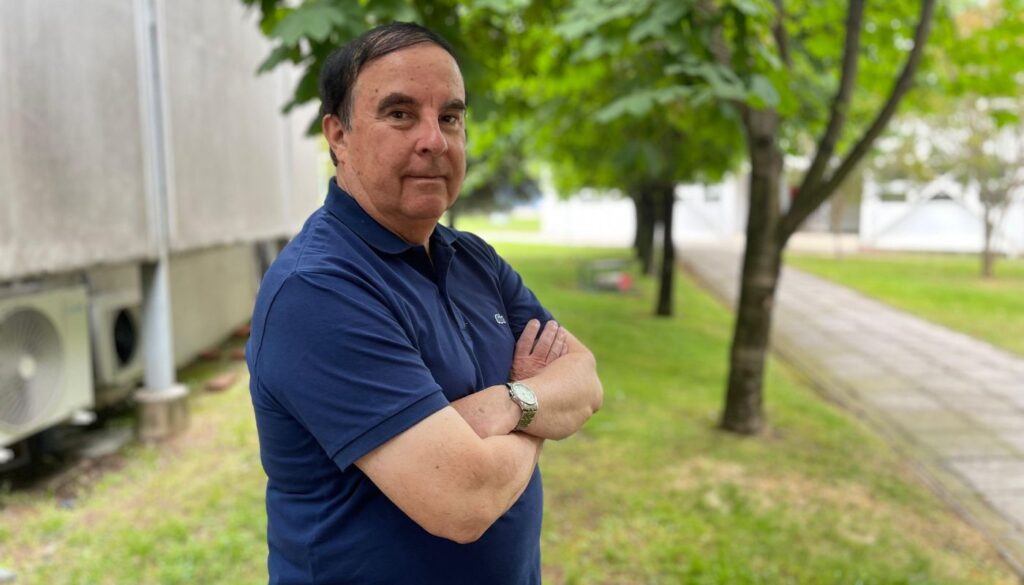
“There has been a lot of talk in recent years and in recent seasons that the quality of fruit under cover is lower. I have to admit that in general this is true, but that these lower “qualities” are often within acceptable or good quality. However, I think that framing the fruit under cover as being of poor quality is extremely unfair to the product under cover, considering that the main factor in using roofs is to protect the fruit from pre-harvest rain to avoid losses due to splitting or “cracking.” Therefore, the question that one asks is whether the fruit under cover is so bad? Let’s analyze this factor after the rain. Let’s sit down and look at the fruit that was under cover after the rain because probably this assessment is very subjective or very relative to what the quality of the fruit is or how it is.” said Carlos Tapia, technical director of Avium.
According to research conducted by Avium, rain protection covers have a positive effect on growth and size distribution, as well as producing a greater susceptibility to post-harvest damage, mainly due to the fact that the hardness of the fruit is reduced under the cover, having direct consequences on the susceptibility to mechanical damage.
“I believe that there are two reasons why indoor fruit may be of poor quality: one is the distance or how close the tents are to the plant canopy. When they are closer to the canopy of the plant, there is undoubtedly an effect of higher temperature and higher relative humidity on it, especially in the last third, so the fruit could tend to soften a little more. However, we also have to understand that this increase in temperature in this area of the plant consequently probably brings about an acceleration of the ripening of the fruit, so if we are not able to understand that we have a disparity in ripening and we sweep our harvest, there will perhaps be a third of that fruit that is overripe and that overripeness that is often recognized as softening, fruit with a somewhat more dehydrated pedicel or with fruit of darker colors, dark mahogany, perhaps black, occurs because the harvest point of that fruit due to the direct effect of the roof in terms of temperature was 4-5 or perhaps 6 days before the moment in which the harvest was swept. Tapia added.
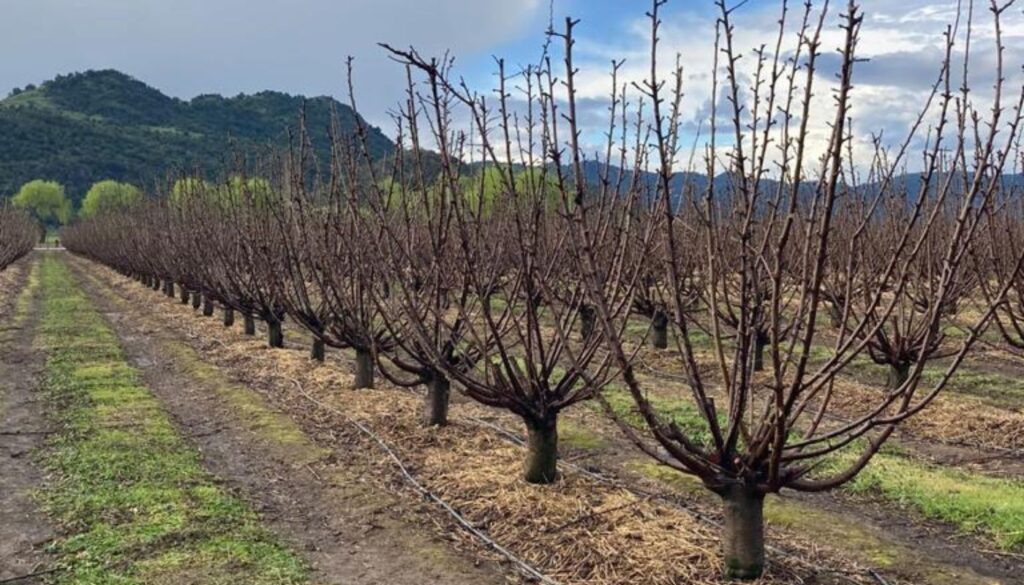
The research was carried out in a commercial cherry orchard in the town of Tutuquén, Maule Region, Chile. The plant material used corresponded to the species Prunus avium, cv. Bing on Colt rootstock. The orchard was established in 2007 at a planting distance of 5.0 x 2.5 m, with a traditional central axis training system. The covering system used corresponds to the classic three-wire system, which is the most commonly used in cherry production in Chile. The treatments used are detailed below (Table 1).
Table 1. Treatments for evaluating the effect of rain protection cover on fruit condition and quality parameters in P. avium cv. Bing.

1 without permanent cover all season
2 indicates crop cover 25 days before harvest (beginning of straw color of fruits).
In the covered crop (T1), the equatorial diameter (mm) and the fruit weight (g) were significantly higher (Table 2) than in the treatment without cover (T0). In addition, it is recognized that the distribution of sizes in XL, SJ and EJ showed statistical differences between the treatments, with a clear superiority in those under the treatment with cover. It was reported that the treatment without cover presents a greater quantity of fruits in the J and EJ categories, while in the T1 treatment, the greatest quantity of fruits is observed in the SJ and EJ categories, which corroborates the effects of a better caliber curve of the treatment with cover.
Table 2. Diameter (mm), weight (g) and fruit size distribution for each treatment in percentage (%) in fruit of P. avium cv. Bing.

In the study, one of the main characteristics that were altered by the use of covers was the resistance to penetration of the pulp (Durofel), greatly reducing the hardness of the fruits under cover versus those that were outside, with a difference of approximately 6 Durofel units (Table 3).
On the other hand, Sams (1999) and Sekse et al. (2009) point out that fruits under covers have lower mineral content, such as calcium (Ca), potassium (K) and magnesium (Mn).
“Under conditions of high vigor in covered trees, calcium and potassium move predominantly more towards the shoots and to a lesser extent towards the fruits” Tapia pointed out. According to what has been pointed out, this could explain the results obtained in this research regarding the lower firmness of the fruits under cover, since calcium is directly involved in strengthening the cell walls of plants” (Demarty et al. (1984).
Table 3. Resistance to pulp penetration (Durofel) of fruits of P. avium cv. Bing.

Regarding the measurement of dry matter, the study also showed that those fruits under cover had less % of dry matter inside, compared to those fruits that were outside.
However, the greatest difference between the fruit with covers and those without was found in the measurement of the incidence of mechanical damage in percentage at 45 days after harvest and in the measurement of brown pedicels. The highest percentage of healthy fruit was found in the control without covers, versus that fruit with covers, which had a higher percentage of bruises, adhesion and pitting, as well as a higher percentage of brown and green pedicels.
“Finally, the use of roofs without any technical analysis, considering a different management of irrigation and nutrition, may cause the trees to generate an excess of vigor, mainly aided by the higher temperature that these tents print in the last third, but also by the relative humidity. What does this affect? The growth of the shoots in the last third of the roof is more abrupt and more powerful, therefore, they generate a vicious circle of increased relative humidity. As it is roofed, this relative humidity has no way of escape and a “greenhouse” effect is generated that makes the fruit soften a little more due to the effect of the temperature, but also that an environment is often conducive to fungi, especially in varieties sensitive to fungal diseases such as, for example, Sweetheart. On the other hand, the excess of vigor that is measured in the growth rate of annual materials generates a diversion of some essential nutrients in production such as calcium (Ca) and potassium (K). These two nutrients travel through water and move by a transpiration flow, therefore the demand for them is given by both the fruit and the shoots, but if the shoots have a greater force of attraction, these nutrients will go with greater priority to everything that is an annual shoot to the detriment of the accumulation of these nutrients by the fruit. Therefore, it could also be explained that the potential lower quality of the fruit could occur due to this option, however, I insist that it is unfair to say that the fruit under cover is worse or of lower quality, because the system under cover has to be managed in a different way, a different way of irrigation, different in terms of nutrition and different in terms of cultural management such as pruning or load regulation and even using some vegetative vigor control techniques. the expert highlighted.
Bibliographic references
- Balbontín, C., Ayala, H., M. Bastías, R., Tapia, G., Ellena, M., Torres, C., Yuri, J., Quero-García, J., Ríos, J. & Silva , H. (2013). Cracking in sweet cherries: A comprehensive review from a physiological, molecular, and genomic perspective. Chilean journal of agricultural research, 73(1), pp.66-72.
- Demarty, M., Morvan, C., Thellier, M., 1984. Calcium and the cell wall. Plant Cell Environment. 7, 441–448.
- Glenn, G., & Poovaiah, V. (1989). Cuticular properties and postharvest calcium applications influence cracking of sweet cherries. Journal of the American Society for Horticultural Science 114, 781-788.
- Meland, M. (2006). Technical design for rain protection covers against cracking for sweet cherry orchards. International Cherry Seminar. Viña del Mar, Chile.
- Carlos Tapia: Personal communication/Avium Research.