Agralia was founded in 2006 to develop products that offer specific solutions to farmers.
“Until then we all looked at the crops from below, and from then on we started to look up, at the plastics and nets that cover them, which modify the radiation.”
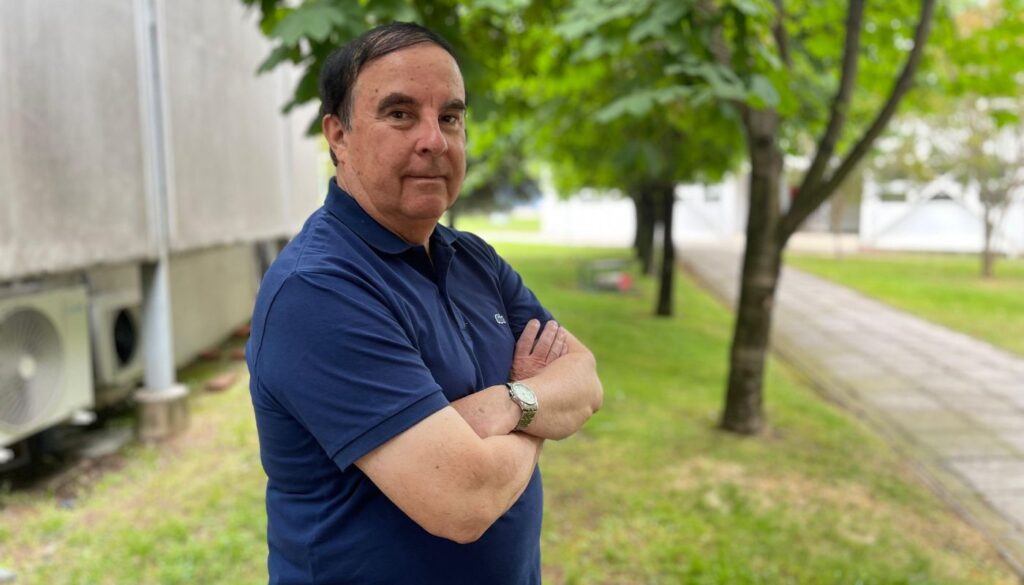
Through this phrase, Miguel Szpiniak, President of AgraliaGroup, explains how more than 25 years ago he completed a postgraduate degree in micro agroclimatology, which ultimately led him to preside over one of the most important companies in the field of covers and technology worldwide.

“There were problems in crop production for which we could not find solutions, we did not know what the cause was, at that time we were always looking at nutrition, phytosanitary problems, pests, diseases and, sometimes, there was no response to the problems that arose, and on a visit we detected, with a professor from Israel, that there was a problem with UV radiation,” Szpiniak explained.
This was the beginning of Grupo Agralia.
“Companies hired me to help their agricultural departments decide which plastics or nets to sell for each crop. Unfortunately, the manufacturers did not accept my conclusions. I indicated that this producer had to use this particular plastic or net, and the manufacturer said: since I do not make it, it is better for me to use another one.” said Miguel Szpiniak.
Finally, together with two other companies, they formed AgraliaGroup.
“I realized that manufacturers do not seek solutions for farmers, solutions to increase the farmer’s profitability, but rather seek to increase the profitability of their company, not that of their clients. That is why in 2006 we created the Agralia Group and began to develop our products, because if I found that a farmer needed a mesh with certain qualities for the climate and crop they had, whether it was photoselective or to improve light diffusion, that specific mesh had to be manufactured for that client, and that is why Agralia was born.” explained the President of AgraliaGroup.

For several years, Agralia provided services to other companies, but finally, thanks to research, technology and innovation, it entered the market for covers directly, but with the development of new products and the improvement of others already existing on the market.
“Agralia develops the product with our plastics and textile consultants and our agrotechnical team, our agricultural engineers, they tell us that this plastic needs to have a UV transmission of such wavelength at such length, or that it blocks the wavelength of this effect, which can be 640 nanometers, to give the effect that we need, therefore, what we do is explain to the additive manufacturers, to the chemical engineers who work with us, what it is that we need and they manufacture the additives for us, the tests are done, we see what is needed and we manufacture the appropriate product,” explained the President of AgraliaGroup.
Agralia and covers for cherries

Agralia, a pioneering company in research, innovation and development, is now in Chile and has made its products and solutions available to the cherry industry.
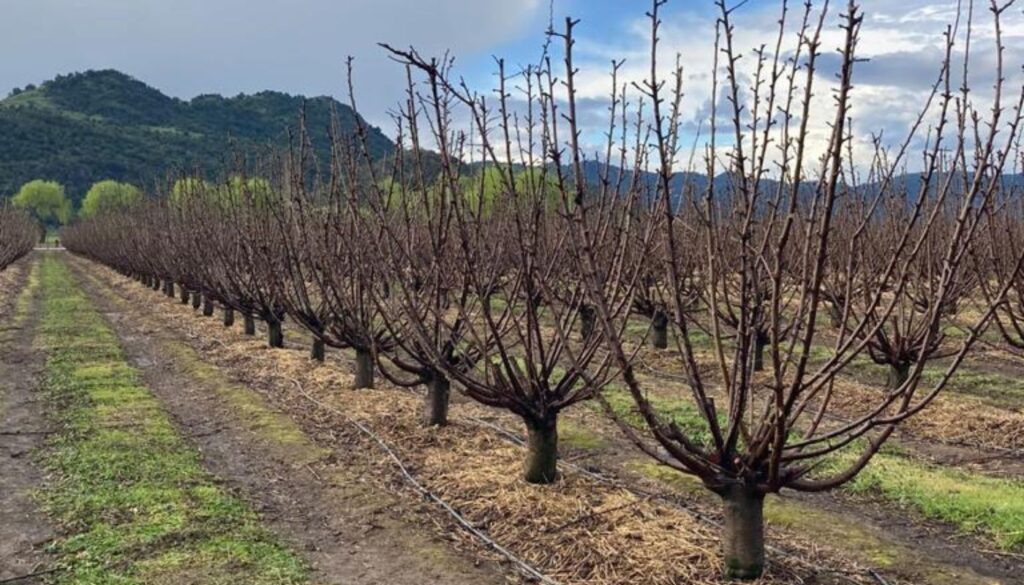
“What we have been very successful at in Chile is that we developed a cherry cover that is not just a rain protector, it is a product that can be put on from the moment the plant has accumulated the necessary cold hours, that is, it can be from September until the end of the harvest, one or two more months, that is, it can be put on the crop for 4 to 7 months; it protects from frost, hail, regulates radiation to avoid lack of temperature or light, but also to regulate excess temperature, to maintain the light, temperature and humidity on the leaf necessary to obtain the maximum amount of net photosynthesis. What do we achieve with this? That with a cover that is put on an average of 5 to 6 months, we have a firm cherry, with good color and good size,” Szpiniak said.
Agralia supplies differentiated products according to the needs of each region's crops, improving efficiency to obtain greater profitability in production. In turn, with the use of these products, it is necessary to pay special attention to other cultural management in the orchards.
“When we use this type of cover, we have to drastically modify the nutrition and irrigation of the plant; we cannot continue to water and fertilize as we would do with an open-air plant. There are crops or developments of some Agricover covers that can save water, others not; the less water, the less fertilizer, but you are also causing very favorable microclimatic conditions in which the plant develops an excessive vegetative system. Therefore, we have to control the nutrition that favors vegetative development and allows us, through the cover system, to increase the nutrients that favor the firmness of the fruit or the development and induction of reproduction; that is, we can increase elements such as Calcium, Potassium, Magnesium and reduce elements such as Nitrogen. We say that when we supply Agricover we are not selling a cover, but rather we are offering technical solutions for the microclimate of the crop and that, in fact, is what differentiates us from the vast majority of Agricover manufacturers.” Szpiniak warned.
The products aim to control the microclimate and thus improve crop profitability, reduce risks and provide greater security to the farmer.
“We look not only at the product not breaking, but also at the economic benefit in the quantity of fruit, for example with Agricooler in uniform flowering and in the accumulation of more hours of cold, and with this we achieve a more uniform harvest and significant savings in labor; all these details are what we take into account to develop a cover, whether it is a mesh or a plastic cover,” said Miguel Szpiniak.
Agralia has its headquarters in Barcelona, Spain, and sells products from the United States, Mexico, Central America, Colombia, Peru, Chile, Argentina, Uruguay, Paraguay, South Africa, Australia, Morocco, Tunisia, Spain, Italy, France, Portugal, Serbia, among other important markets.
Asked about the relevance for Agralia of being part of Smartcherry, Miguel Szpiniak highlighted the high-quality technical content that our platform delivers.
“Since we arrived in Chile, we started to be in contact with all the specialists in each of the crops to understand what the market requires and through what we saw in Smartcherry’s publications is that it provides a lot of technical information to farmers; it is true that there are also other platforms that have information on markets, logistics, but Samartcherry provides technical information, for example why there are soft fruits, of one size or another, etc. and we wanted to be close to the professionals who provide agrotechnical information to the producer and this platform is helping a lot,” concluded Miguel Szpiniak.