- Physiological signals and morphological changes define good floral development sustained in each season.
- The period of induction and flower differentiation are essential to sustain productive potential and are perfectly connected with other processes within the growing season.
The first physiological change that occurs is floral induction, which determines the bud's vegetative development and the possibility of becoming a flower bud. Later comes floral differentiation, which corresponds to a morphological change that leads to the appearance of flower primordia. Then, during the autumn, in the dormant stage of the tree, the buds close, ceasing their development and without any apparent change, to finally resume their growth completely in spring. Knowing these processes allows producers to influence how many flower buds will determine the intensity of flowering and therefore the number of fruits obtained per plant.
In the floral induction stage, which runs from 70 to 110 days after full flower (DDPF), complex processes occur that are produced by stimuli originating outside the stem apex and that induce the formation of floral primordia (Hempel et al., 2000) in stage II of fruit development (Elfvinget al., 2003) until the cessation of shoot growth in midsummer, generally identified with the shortening of the photoperiod. The moment of floral induction of the species depends on certain factors such as: the characteristics of each cultivar, the physiological condition of the tree (which can be affected by the climate), the abiotic conditions of the site and undoubtedly by the cultural practices and/or management carried out in the orchard (Thompson, 1996; Guimond et al., 1998a, b; Engin, 2008; Beppu and Kataoka, 2011; Tapia 2018).
Regarding the differentiation of the flower bud (approximately between 110 and 140 DDPF), it occurs in two main periods of time. The beginning of flowering and primary development occur at the end of summer and beginning of autumn depending on the climatic zone where the crop is located. After dormancy, the final differentiation of the flower occurs when temperatures rise again in spring and the phenological development of the crop begins.
To complete flower development, they must remain in a dormant phase in winter, where there is a state of inactivity to withstand low winter temperatures and meet the cold hour requirements for each cultivar.
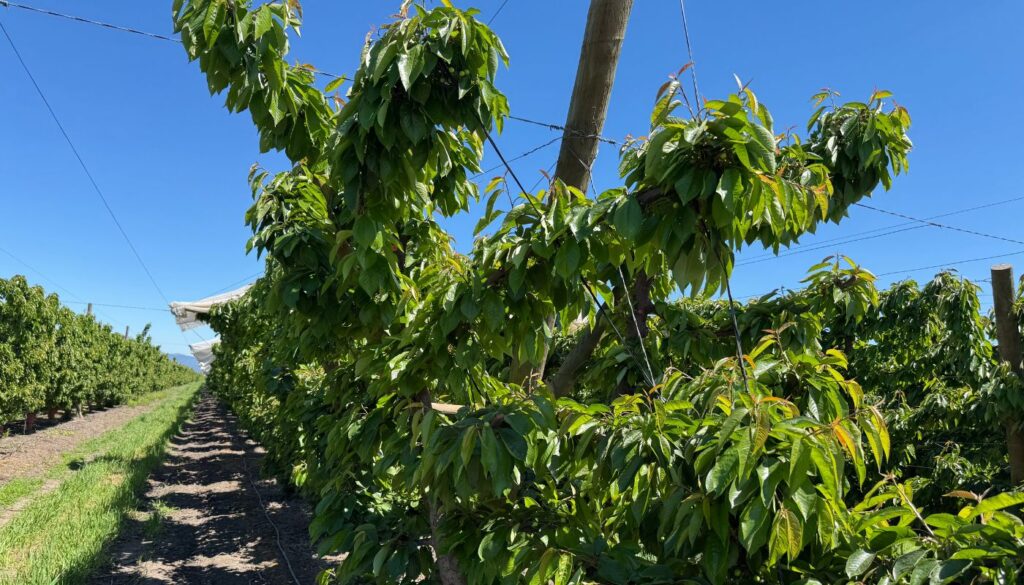
“The common factor that benefits both processes is LIGHT. Adequate lighting of the plant allows both processes to develop optimally, enhancing the formation of flowers in the plants.
Considering this, the lack of light inside the canopy can be due to several factors such as the rootstock/variety combination, nutritional program, irrigation scheduling, pruning to enhance vigor, etc.
It is important to read the plants perfectly when deciding what actions to take to ensure optimal lighting. This includes the decision to carry out summer pruning to encourage light to enter the future fruit centers.
In vigorous orchards, it is important to ensure light for these processes once the harvest is over, so early pruning is a fundamental task. However, if this pruning is carried out before January 15, it is very possible that there will be regrowth from the cuts, which in most cases must be accepted and some work can be carried out before autumn to ensure their lignification. If summer pruning is carried out after January 15, there will almost certainly be no regrowth.
For summer pruning to have a direct effect on light use, it must necessarily be completed before February 10.” said Carlos Tapia, director of Avium.
One of the practices to demonstrate the reproductive status of the orchard and understand its behavior and thus be able to generate an orchard history, is the analysis of bud fertility in cherry trees (AdYC) which allows obtaining objective information on the productive potential of the season and from this point of view make decisions on appropriate cultural management, such as pruning, bud thinning, and also with this, generate practical information for carrying out management that helps adequate training in the processes of induction, differentiation and latency of the flower.
Bibliographic references
- Carlos Tapia- Personal communication.
- “Cherries, botany, production and uses” - Edited by: José Quero-García, Amy Lezonni, Joanna Pulawska and Gregory Lang.