The international consultant specializing in fruit trees was at Cherry Tech 2023 and spoke about the cherry industry, changes in varieties and the industry's efforts to find new markets.
What are the remaining questions surrounding cherry trees, in terms of their agronomic management in the southern region, especially here in Chile?
There are still many questions. If we go to the southern area and talk about the Curicó, Chillán, Talca, Linares, Los Ángeles areas, we see a lot of orchards there, but the most complicated issue is the commercial one, that is, we do not know if the volumes we have in that area are capable of being consumed by the Chinese market, which would arrive after the Chinese New Year.
The thing is that before the Chinese New Year there is a frenzy. People buy as gifts because of everything that cherries mean, but the truth is that in the case of the late season it is basically aimed at consumption and the latter is not as high as what we manage to sell before the Chinese New Year.
So there is something very hidden there and it is opening up to the extent that we arrive with good quality. I think that will definitely change the market, it will accept and increase its consumption.
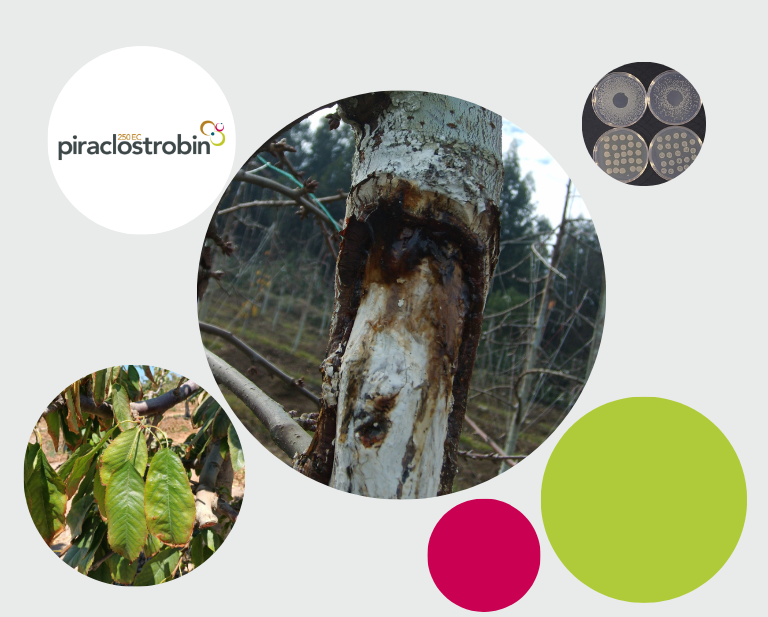
Regarding the agricultural aspect, we do indeed still have quite a few problems with the issue of diseases, and I am referring to wood fungi, among others, and which are associated with projects that did not have a very careful start, in the sense of segregating the irrigation sectors, mainly because I have humid sectors mixed with drier sectors and that means that I have plants in constant stress with respect to irrigation and that opens them up to being much more sensitive to diseases, as was pointed out in the talks, so it is something that we have to solve.
The other thing is the variety. We have a star variety, Regina, resistant to splitting, which adapts very well to the south, but with a shorter lifespan, and we are working on giving it the timing that really corresponds.
We had two years of very poor logistics and very poor arrivals. This past year, logistics were handled well, and that problem was solved. So I would say that the further development of the agronomic problem is more related to the issue of diseases related to risk structures and sectorization designs.
There is another issue, obviously the same agronomic problems that we have seen, such as being more precise with respect to the load regulation projection, in order not to incur in abuses and that it costs us a little to reduce the acidity and the flavor of the cherries, which are different, but they also have a greater caliber potential.
If you had to do an analysis of Chilean cherry producers, what are they lacking in or what have they done well? In terms of soil climate management, varieties, irrigation, drainage, nursery rootstock formation, among others.
Look, Chilean producers are super aggressive, which sometimes means quite high costs of loss. We learn by falling, but we move forward quickly. Obviously with a cost, we lose some orchards, some varieties, some rootstocks that were not what we thought, rootstock-variety relationships that were not the right ones.
But the technical level of the Chilean producer is excellent, it is very good. I find that the learning that he has had in fruit growing, not only in cherry, but that this comes from a legacy of the apple industry, of table grapes, since it was a great contribution especially in the area of irrigation and more mathematical management.
In fact, we started counting because in table grapes and other fruits the load regulation is quite mathematical and we had to count something in order to regulate the load. So I think that the producer is very advanced in Chile, but we are in debt in terms of harvest logistics. We take this stage of production a little lightly and the harvest is the end of our year's work. So I have to plan it ahead of time, with contingency measures in such a way as to know how to act in the face of major problems, but the truth is that I would tell you that the main thing could be on that side, the management of the harvest and the management of large masses of people.

Given the climate changes that are occurring, how can producers anticipate, prepare, and minimize risk? Because they are in some way under pressure with the issue of sustainability.
We all know that we need to be prepared for the weather. We have forecasters, we are always listening to Fernando Santibáñez, looking at all the models and other climatologists, trying to know how the season is going to go. The usual thing that is said is that what happened in the northern hemisphere will happen in the south and nobody confirms that. One gets scared when we see the floods that occurred in California and they can be replicated here.
We had brutal winter rains, which left many orchards flooded, especially in the seventh coastal region, in the sixth coastal region, due to the increase in the flow of the rivers and the level of snow that was much higher than normal. Another issue is related to the warm weather and the fruit load. There are several technologies that have been developed to improve the issue of fruit setting or the lower amounts of accumulated cold, as well as to deal with possible rains close to the harvest, working on the issue of varieties that are more resistant and more tolerant to rain and the issue of the use of plastic. In this last point we have made a lot of progress, but it is still in its infancy, I mean that we buy plastic or install plastic without really knowing what we are buying.
We have tried to narrow things down, in such a way as to say that this plastic has these characteristics, that this one produces softening and this one does not, although I have not yet found any that does not produce softening enough to leave the garden covered all the time. We have to open and close the plastics, they get dirty, they lose their transmissibility and that can decrease right during the period of floral induction.
So I think that we have made a lot of progress in this area, but we still need to reaffirm the types of structures and plastics. In this regard, we are less protected when it comes to choosing the most suitable plastics in terms of resistance and characteristics.
In the panel you led, there was a lot of talk about the value of the orchard in its initial stage, for everything that has to come later in the post-harvest. What advice would you give to cherry producers?
The most important thing for a new garden is to analyze the soil characteristics that I have, the pond capacities, the drainage needs, the amendment needs prior to the creation of the garden, because after the garden is established, there are things that can be done, but not many. However, at the beginning, many things can be done, especially regarding drainage and especially regarding structure. We are not going to change the texture, but I can achieve a greater macro porosity in the structure, and that is basically done at the beginning of the plantation.
But in addition to this, a good irrigation design is important. Irrigation should be around US$$4,000 or US$$5,000 per hectare. They may be lower, but that cost is for the life of my orchard, so compare those US$$5,000 or US$$4,500 with what we spend on phytosanitary products in the year and they are in the order of US$$3,500 to US$$4,000 and we do not question it. We discuss that initial investment a lot and that is where we have to invest, design the sectors well. That would be the most important advice for those who are going to start.
Obviously, once I prepare the soil and it achieves macroporosity, it is not easy to maintain it over time. The orchards are monocultures, they become compacted, I lose organic matter, I lose the microbiology of the soil, the use of humic acids from microorganisms, applications of microorganisms and applications of biostimulant directed at the microorganisms in the soil is the key. That has to start from the first year.
As for varieties, which do you think should be promoted both in the north and in the south? There is a lot of talk about replacement, however, it must be taken into account that to have replacement, plants are needed and this takes time. What are the time frames that the industry is managing and how do you see it?
Look, there is a bit of history and I will try to summarize: varietal replacements are certain and they will come no matter what. You just have to look at the apples, which were the first to start with replacement, then the table grapes, not to mention the nectarines and peaches that change 30 to 40 varieties a year, the blueberries too, especially in Peru. So, in the case of cherries, it will come today when we are learning about the whole pack of varieties that we had in the 80s, we jump to the 90s with this bombardment of Summerland varieties of which two quite powerful ones remain: one is Santina and the other is Lapins.
Santina, because it is early and has an ideal and easier post-harvest. We have learned to manage Lapins and not abuse it, because it is a tremendously productive variety and one demands it by trying to leave loads and harvesting it later because it gains more size. So I think we are just finishing learning how to manage these varieties, because they are also on different rootstocks.
Therefore, we have to learn from the new varieties, of which we have many. We have a real bombardment of early and late varieties. The late varieties have been left aside a bit because of the issue of arriving after the Chinese New Year and as varieties with more outstanding flavours arrive, as happened with the grapes that we currently have, varieties with spectacular flavours, the same happens with cherries. Within everything we have analysed, there are varieties that stand out in flavour and that can overthrow a variety that is an icon today given its flavour, so I think that there is something to be said about flavours. We have to go hand in hand, developing the whole agronomic and land issue, which has to move forward.
As for early varieties, we have a large offer, there are several that are standing out, but the truth is that our Chile is far away in the markets, therefore we have to not only analyze the characteristics of the productive life, but also that they last in post-harvest, that they arrive well and that is at least four seasons and then I need at least three post-harvest seasons to know something about the variety.
Finally, I am missing the opinion of the consumer there, who at this moment is the Asian consumer who may like one more than the other. Years ago I was asked, “In the early stages we have Royal and we have Santina. The Royal is a little richer, the Santina is flatter.”
Currently, the Santina is the most popular variety because of its characteristics of being more resistant to bruises, while the other is more sensitive and a poor traveller, but we will learn all that with these new varieties. Therefore, in the development of new varieties, five or six years are needed to say that these are the varieties and this will be at the expense of the producers because we are planting everything. We are planting the ones that we think are better today and then we see that this variety did not work, this one did not either and we are left with one.

The next question is related to what you mentioned about tastes. We cover the Chinese market, but now trade missions are being created there in order to open markets. India is also mentioned, but there is information about the tastes of that consumer.
There are quite strong surveys being carried out, we were with the president of the Asoex and they are working in the committee in that sense. But today we have a tremendous obstacle and that is that the variety arrives in good condition after 60 days of travel, so it needs to be developed a little more. On the other hand, how much India is raising in terms of consumption, we do not know the tastes, if they adapt to the Chinese New Year, but we do not know about India, they are very different and what happens in China and India is not comparable.
But I want to think positively and I think that with 1.3 billion inhabitants and the growth that it has, obviously we are going to have a market where people will be able to afford to consume cherries. Therefore, I think that it is a market that is developing little by little, but we do not know much about the tastes and that is why Asoex is promoting marketing.
How do you see the future?
Always positive. The truth is that we as an industry have been aggressive, we have won, we have lost, but we are on a positive upward curve. Although you saw what Carlos pointed out, that annual increase from 5,000 to 7,000 hectares is not that much anymore. This would be the last year of strong growth and then it would stabilize, because we know that we are reaching a limit. If we exceed the demand of our markets with supply, obviously we would have bad years. So today we have to keep up, if for some reason China receives more than 90% of our cherries and “catches a cold,” we will be on our backs, that simple.
That is why it is important to develop other markets, but they are all working in their area, we are on the technical side and the field, the sales people are working on the new markets and development and the post-harvest seeing which of the existing varieties are the ones that are best suited and can access those markets, so I always see it as positive with the environment that exists in Chile to move forward and develop.