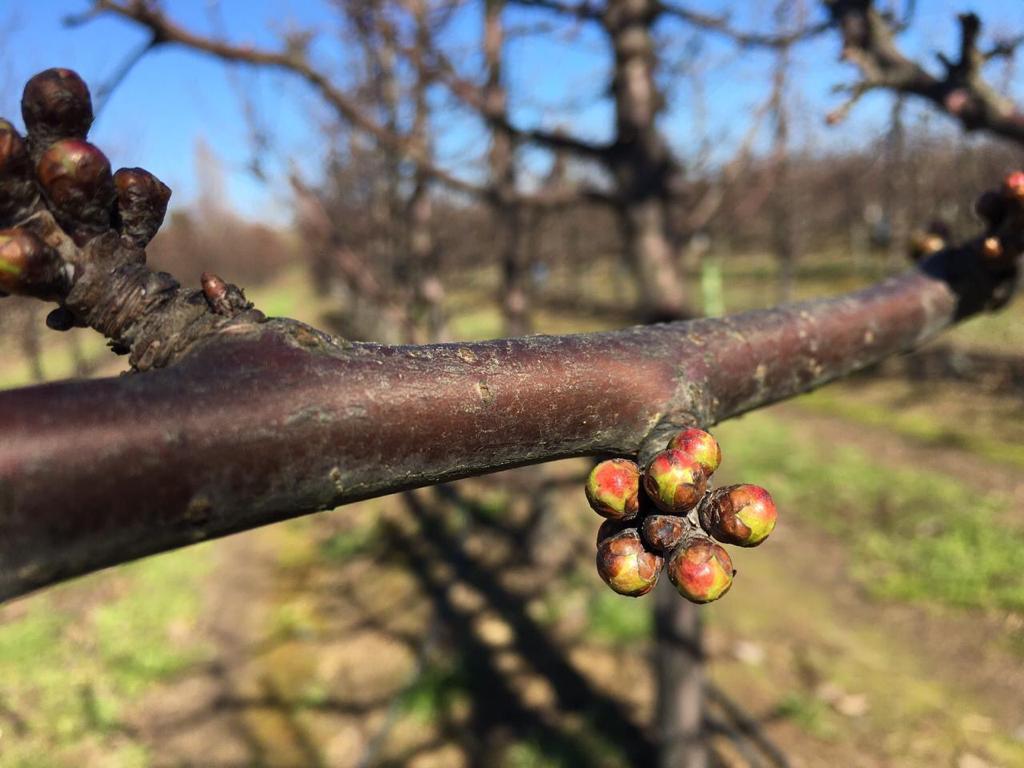
There is no doubt that this has been one of the most difficult seasons in living memory. A winter that brought little cold in many areas, which reduces the productive potential of the varieties; and now we are experiencing a spring as well, with changing weather conditions, which has resulted in low temperatures, little accumulation of DG, and rainfall that has reduced the volume of the harvest this season.
The outlook is one of nervousness and many questions. But the call is not to give up, to stay active and do everything possible to get through this season. One of the visible consequences of all these variables has been a disparity of phenological states, where the difficulty in homogenizing harvest color can translate into an additional headache.
Quality and condition are direct parameters for the profitability of a cherry orchard based on market demands. One of the strategies for obtaining fruit with adequate color in the orchard is the use of products that allow an adequate harvest strategy, thereby reducing operating costs by reducing the risk of carrying out more than one fruit harvest because one is not at its optimal harvest.
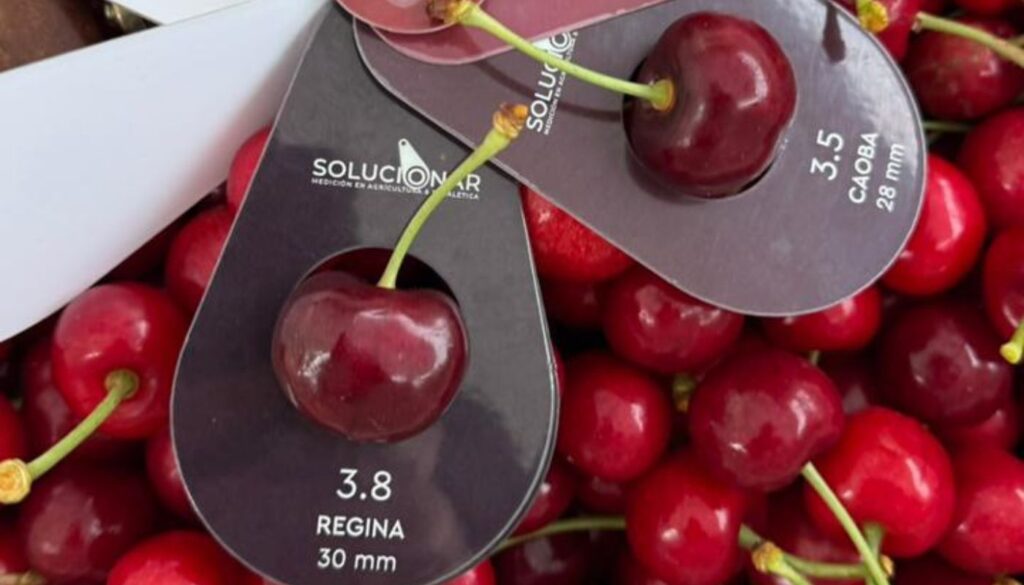
Colour, in addition to being closely related to the firmness and soluble solids content of the cherries, is the factor that indicates their degree of ripeness and, in turn, determines the moment in which they should be harvested.
From here on, a product like M10 becomes indispensable in programs for high-quality, high-color and high-condition fruit. This product contains: P, K, B, Mn and Mo, which allows:
• A perfect relationship between nutritional elements to promote the ripening process of the fruit and the plant.
• Rapid assimilation and translocation of the plant and intense action with evident effects.
• Strong vegetative regulation action.
• Uniform ripening and clear improvement in the organoleptic characteristics of the fruit (dry matter and ss)
• Uniformity of fruit color at harvest.
• Fewer harvest passes.
Recommendation:
M10 is recommended to be applied at 7.5 l/ha starting at straw colour and repeating 7 days later; or make a single application at: 1.5 L/100 L of water 7 days after straw colour. It can be applied even with hard water.
Commercially, this product is exclusively available at Copeval. More than 30 years of M10 in different international markets guarantee its effectiveness and quality.

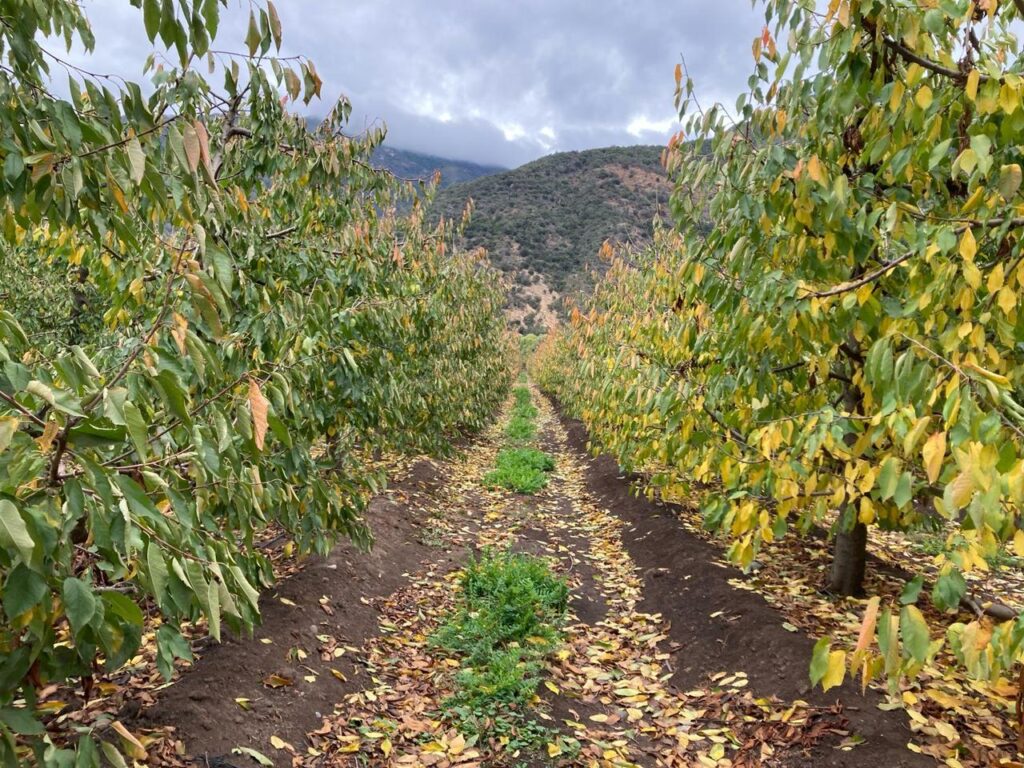
And if we add to the difficult weather conditions during winter and spring a slow entry into recess and fluctuating temperatures, it could largely explain what we have observed in the field; uneven, extensive flowering and consequently a harvest with fruit in different states of maturity, slow accumulation of soluble solids and uneven color development. However, we are still in time to face the last stage of fruit development; active growth, synthesis and mobilization of sugars and color development, which as has been mentioned has a direct relationship with the maturity of the fruit and finally with the profitability of the orchard. Therefore, it is in these processes where we must now concentrate our efforts and management.

Since the marked lack of uniformity of flowering began to be observed in many of the agroclimatic zones, the complexity that will be faced in the harvest could be glimpsed, for which it is important for us to address it with agronomic management. For this, it is especially important to reinforce nutritional programs according to the needs and standards of each orchard; Molybdenum with an active role in nitrogen metabolism, Potassium key in the biosynthesis of proteins, carbohydrates and in cell expansion, Boron important in the synthesis, transport and accumulation of sugars towards the fruit and Calcium acting in preserving the integrity and stability of membranes, and consequently contributing in this way to a greater firmness of the fruit. It is for this reason that, weeks before the harvests begin in the central zone in most of the larger varieties, it becomes more important to reinforce the foliar fertilization programs with these elements; Potassium, Calcium and Boron and complementing them with Phosphorus and Molybdenum mainly or with products that have them in a balanced way in their formulation. Along these lines, I have been able to observe good experiences and positive results with M10.