In this 2023-2024 season, the Meda™Rex cherry variety was once again harvested from week 43 in Chile, being one of the first varieties to reach the market and with very good reception comments in China. These ultra-early harvests were under production in macrotunnels in the VI region.
The harvest period of Meda Rex extended from week 43 to week 47 of November (Fig. 1). It was interesting to see that in the Chinese market, Meda™Rex was crossed with Santina fruit from Ovalle, which due to the harvest date, obtained very high return prices.

“Meda™Rex fruit has been very well received in China, where it is considered one of the best new early harvest varieties to hit the market,” says Camilo Alvarado of Yidu, one of the largest importers of cherries from Chile to the Chinese wholesale market. “The Meda™Rex variety has characteristics that the market appreciates, good brix, firmness and good size.” (Fig. 2). The market recognized it with prices similar to Santina, some even call it Kordia junior, due to its fruit quality. A good example of this is the interest that Mr. Liu, owner of the Yidu company, has shown in being able to produce the Meda™Rex variety in China and thus be able to offer this early variety in greenhouses in the Dalian area during the off-season, says Alvarado.

“This variety has been selected for more than 10 years, it is from California and Viverosur together with several Chilean export companies selected it for being very early (10 to 14 days before Santina) and especially for its good post-harvest, since it is an early variety that must travel by ship, air shipments will only be for the beginning of the season, this variety arrives very well to the market after 35 to 40 days of storage,” says Alejandro Navarro, director of Viverosur. This season has been an exception in that they have been shipped mostly by air, but this is only due to the scarcity of early fruit, but Meda™Rex has been selected for sea shipment due to the large volumes that we will have in the future.
“Despite the significant changes in the climate in recent years, the Meda™ Rex variety has been harvested on similar dates in recent seasons in Chile, which is an advantage for being able to schedule future harvests, even though this year the weather was not favorable and affected the expected productions, but the positive thing was that even with 350 HF we had productions this season,” says Alejandro Navarro.
In general, the market tends to be confused with low production and assumes that it is due to Cold Hours (CH), and it is for this reason that we have studied the factors that influence the productivity of Meda™Rex to determine solutions.
Good variety, but doubts about its productivity?
This was the premise with which the Meda™Rex orchards were approached this season, where only the 20% orchards had had good productive results, the rest of the fields had many doubts about the productivity of the variety, some even raised the possibility of uprooting the orchard. The group of producers was officially asked to wait one or two seasons to validate the management of the productive orchards, where they worked together with the Avium technical group to validate the hypotheses of the reasons for the production of successful orchards, as has been the case of Agrícola JG in San Fernando, which has had a productive ranking of 8, 13 and 16 tons per hectare from the third to the fifth year of the orchard. All this validation work with the Avium technical group generated a Handling Manual for the Meda™Rex variety, which is available at www.medacherry.com, where we can indicate some of the most important points below:
Winter load adjustment:
The most important thing was to determine that this variety requires adjusting twice as many fruit centers (FC) per tree in winter pruning, says Carlos Tapia, advisor and director of Avium. It has been detected that Meda™ Rex offers a moderate fruit set, which is a factor that contributes to the quality of its fruit. In quantitative analysis, it has been determined that the variety on medium-vigor rootstocks has specific loads of around 1.5 fruits per sapling, so adjustment pruning must be regulated to be able to privilege the greatest number of saplings in the best possible way. From the above it has been determined that in orchards with medium planting density (1,400 trees/ha) about 700 saplings per tree are required. The Meda™ Rex variety has a very high leaf-to-fruit ratio from the beginning of fruit set and this explains the good caliber of this very early variety.

Suitable pollinators:
Meda™Rex has an early flowering period. It was pollinated with Lapins at the beginning, but in warm areas Lapins requires more degree days (DD) in spring and flowering is delayed. This issue was solved with double application strategies of Cyanamide in Lapins and both varieties agree very well with the management indicated by the Avium team in the management circulars sent to the producers of the Meda™ group and which are explained in detail in the variety manual.
As a definitive solution, varieties from the same group are recommended today, which have similar DG requirements and thus do not cause pollination to be out of phase. The recommended varieties are IVU 548 (Meda™Fox) and IVU 533 (Meda™Taurus).
We have had reports from Europe that the variety IVU 548® (Meda®Fox) tolerates splitting, being an early variety (8 days before Santina), productive and a very good pollinator of Meda® Rex. This year the first commercial plantations have been made and it will be interesting to see the results of this variety in the future under Chilean conditions, since it will be a very good complement to having a pair of early varieties with good post-harvest and that complement each other in pollination.
Driving system:
The Meda™Rex variety has better fruiting on horizontal branches, but not on vertical ones. This implies that the best training systems to consider are the central axis with horizontal branches, the V-shaped system, where the branches are oriented horizontally on the wires, and finally the trellis system, where all the productive branches are horizontal. For two seasons we thought that the Meda™Rex variety was sensitive to frost, because we had little fruit in the lower part of the trees on the central axis, but this year we did not have frost and it was coincidental that all the basal branches with closed angles had little fruit set, while horizontal branches in the same basal position of the trees had normal fruit set, as well as in the upper part of the trees (Fig. 4).


It is very important that producers and advisors carry out this combination of factors to ensure the productive success of this new variety like Meda™Rex, since it is a different variety and we must manage it as close as possible to a “User Manual” and thus avoid bad experiences. According to Ronald Vermeulen, international cherry advisor, this management is very similar to what they do with the Kordia variety in Europe, with a greater number of CF in pruning, in horizontal branches to achieve greater production. This could explain the good productive results that the Kordia variety is having in the trellis system in Chile.
A very harmful spring:
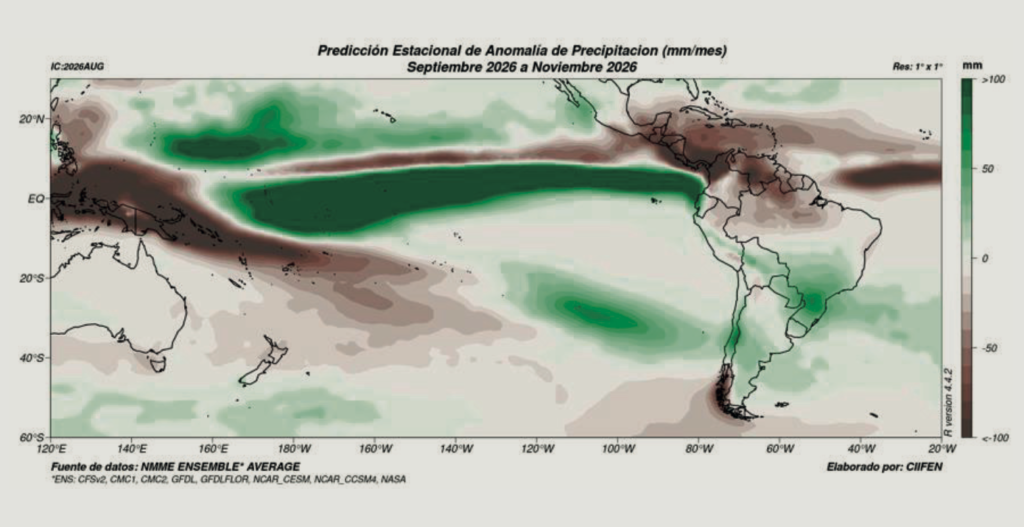
This season we have had a climate like we have not seen for 50 years, the effect of El Niño finally affected us greatly in early cherries, with low production in the coastal regions of the VI and VII regions, where the most affected variety was Santina, reducing its volume by at least 50% of what was expected at the orchard level, which was offset by the entry into production of new orchards in the volumes exported this season that only decreased by 22%. The low chill hours (CH) and spring rains ended up affecting all the estimates of early varieties, where Meda™Rex was no exception, perhaps not so much in terms of production, where it was similar to Santina and in some cases it performed better, but it was affected in the breaking of fruits, where those orchards that were grown under plastic did not have major problems, but without a roof it was seriously damaged and we must keep in mind in the future that all early varieties must be covered, where the value of 20% of an early production is enough to pay for the investment, saving the entire crop or a large part of it.