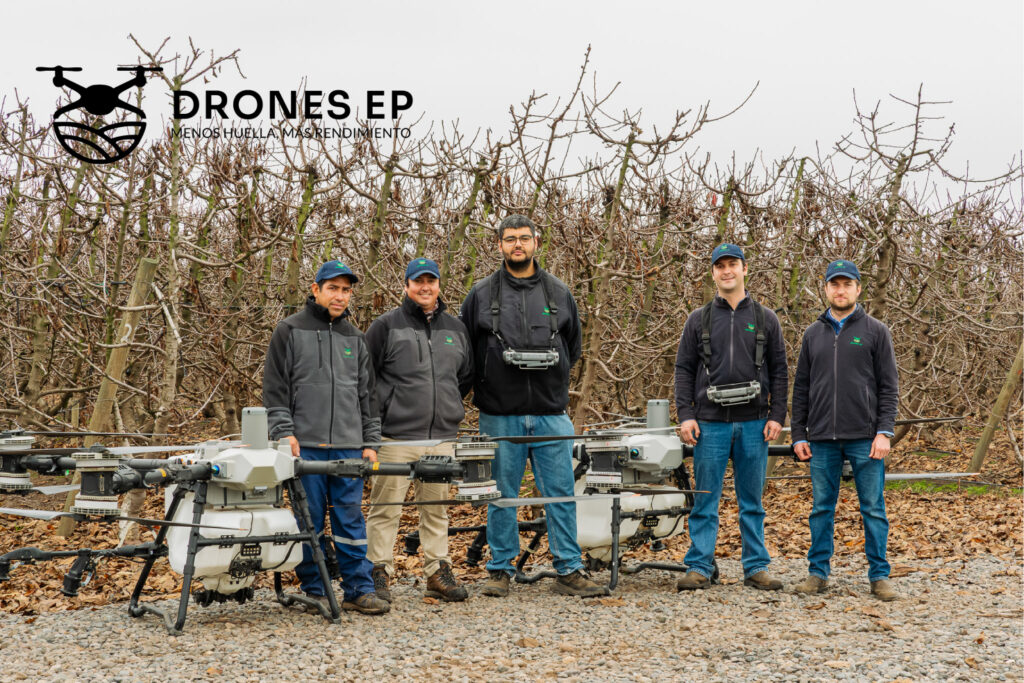

We spoke with Samuel Venegas, Agricultural Manager of Hacienda Los Quillayes, regarding varietal replacement in the cherry industry.
Chile is in a process of varietal replacement, which ones are you betting on inside?
the cherry industry?
«It is a very complex question, because Chile has been based on three varieties and I would say that if we talk about the early and medium zones there are two, which are Santina and Lapins, which make up almost 70% of the production and the later zones have been consolidated with the Regina variety, which has been the strongest in the south. But today what we are trying to figure out as farmers is, with the whole range of varieties available on the market today we have several genetic lines that are working on the same thing, but they are all varieties that are developed in the United States, in Europe and in the United States.
and we have to test how they adapt in Chile.
What are the main characteristics that these new varieties should have?
«We need to choose varieties that are firm, that are sweet, that have a good post-harvest life. But we also have to travel to the markets, therefore the fruit has to arrive 30 to 40 days after harvesting having the same quality with which it was harvested and there is a bit of uncertainty and the dilemma that we have to resolve. We have great varieties that are being tested in many places. Sagrada Familia is in an early zone of the province of Curicó and we are testing the varieties that are developed for early zones of various groups, so we believe that there are several with a lot of potential, which have caught our attention for their size, for their color, for their sugar content and their firmness and I believe that that is what we need to do.
in the line of work that we want to develop. I think it is important to have feedback from clients because the component of our clients in China or in the United States or in the country to which we export it, also has a degree of opinion that must be considered. Someone always said that when we are going to look at the varieties we must consider the sugar, the sweetness, the firmness, but what does the Chinese think of your variety, what does the Chinese think of how it came to him, did he love it as much as we did?
Are we delighted with it here or did you find it to be just another variety of the ones we have?
Could Santina be the strain that marks this path?
«We mentioned it before, Santina is our base, which today has been the queen of varieties in the sense that the one that customers like the most is the second most planted and I think that surely in a couple of seasons it will be the first in fruit exports. So the new varieties have to go along those lines. What varieties do we have that are going to be firmer, larger, sweeter, that are going to have a better opening than Santina? Or they will come out before Santina, that can complement it, that are the prelude, the one that starts the season so that later Santina enters
Santina in glory and majesty to the markets, which will surely be the best-selling cherry in Chile. That is the line of work that we have to do with these varieties and we are all testing, we are seeing that there are a couple of varieties in each of the groups that could have a very promising future if everything continues like this, because when you travel abroad and see them, you realize two things. I saw varieties in Spain developed in Italy and they behave much better in Spain, there are varieties developed in California that behave much better here and vice versa. I have seen that in the catalog I have a couple of rods in the field incorporated that should have matured a few days ago and it turns out that in Chile it is not done, because it is another condition, we have another climate, another soil of origin and that variety has to adapt to other conditions, that is the challenge.
I would like to elaborate on what you are telling us now, that producers need
certainties. Where do these certainties go?
«I think that the way forward is for the varieties that are currently being tested in Chile to be validated in the different conditions that we have. So that the producer, when he has to develop a project, when he has to invest his capital to see the result in three or four years, can be assured that he chose the right variety or wanted what he was looking for, which has not happened to us. With the euphoria of wanting to participate in something that seems new, great, profitable, that is bringing benefits everywhere, sometimes you enter into varieties that do not correspond as some advisors showed, you used the wrong pattern, you used the wrong irrigation system because it is that pattern, with that variety, with that risk in that area, it does not work well. On the other hand, this other pattern, with this variety, with this irrigation, in that area is an opportunity, because today the business has to be first and foremost profitable over time, it has to be sustainable.
Some time ago, we all advanced the Santina variety and stepped on another variety that was not bad, but how do we make sure that this does not happen again? Today, a producer who planted an early variety in a non-early area and is still in a stage of the process where there are other varieties that are much better than those, the bad choice was at the beginning before planting, in the decision of what I am going to do. So that is where we as an industry want to not repeat what happens in all markets, that we can have certain basic guidelines and then we choose with certain tools that show us what we are doing.
correct. Fruit growing is a long-term business and long-term mistakes are very expensive.", concluded Samuel Venegas, Agricultural Manager of Hacienda Los Quillayes, Sagrada Familia.