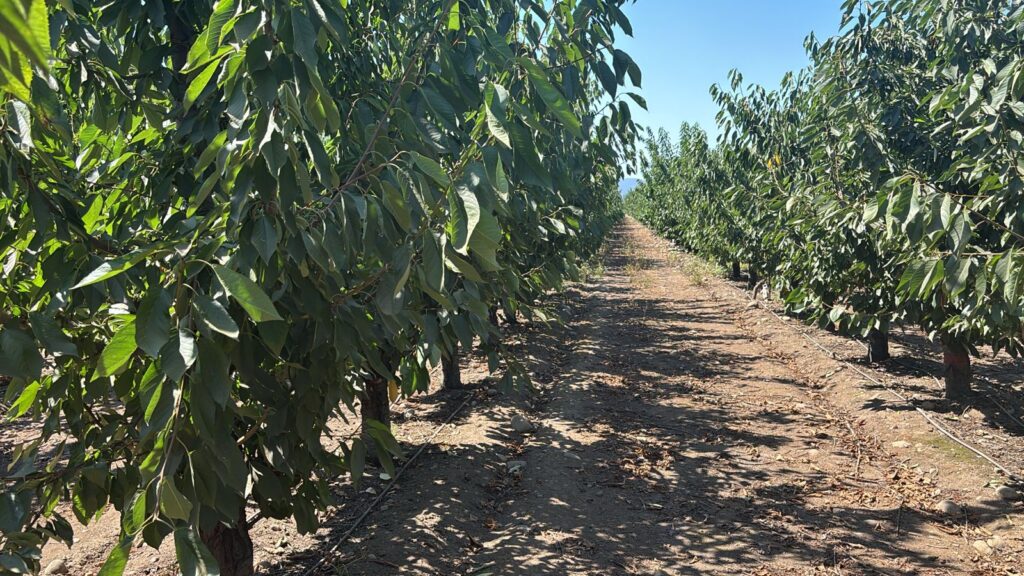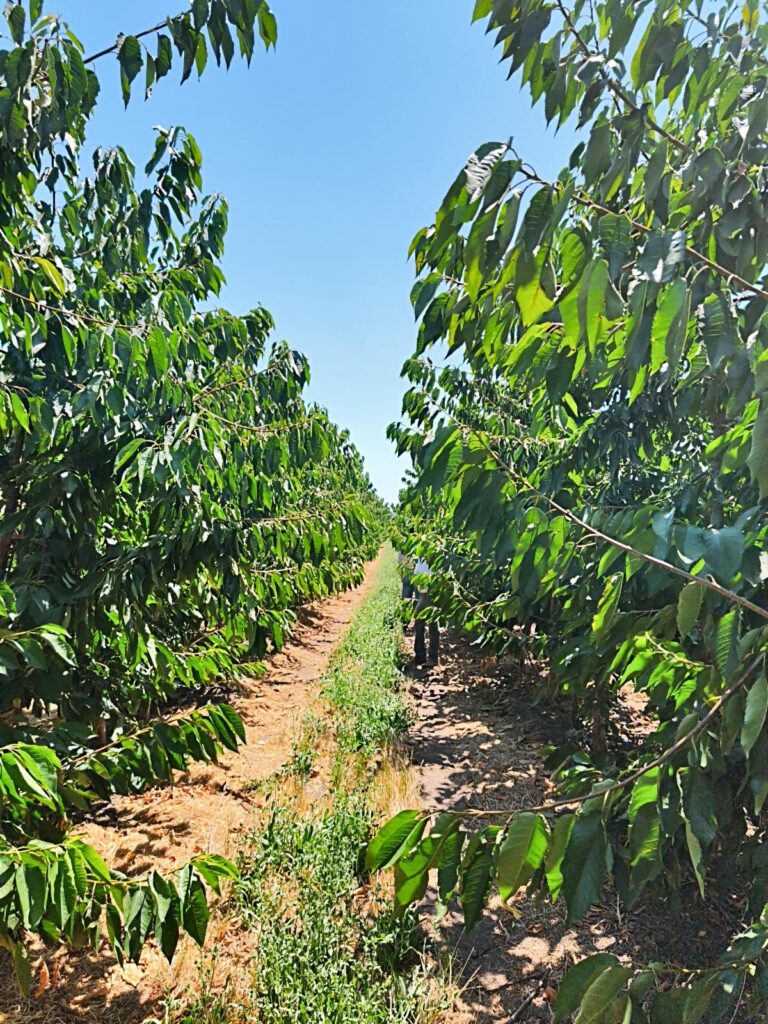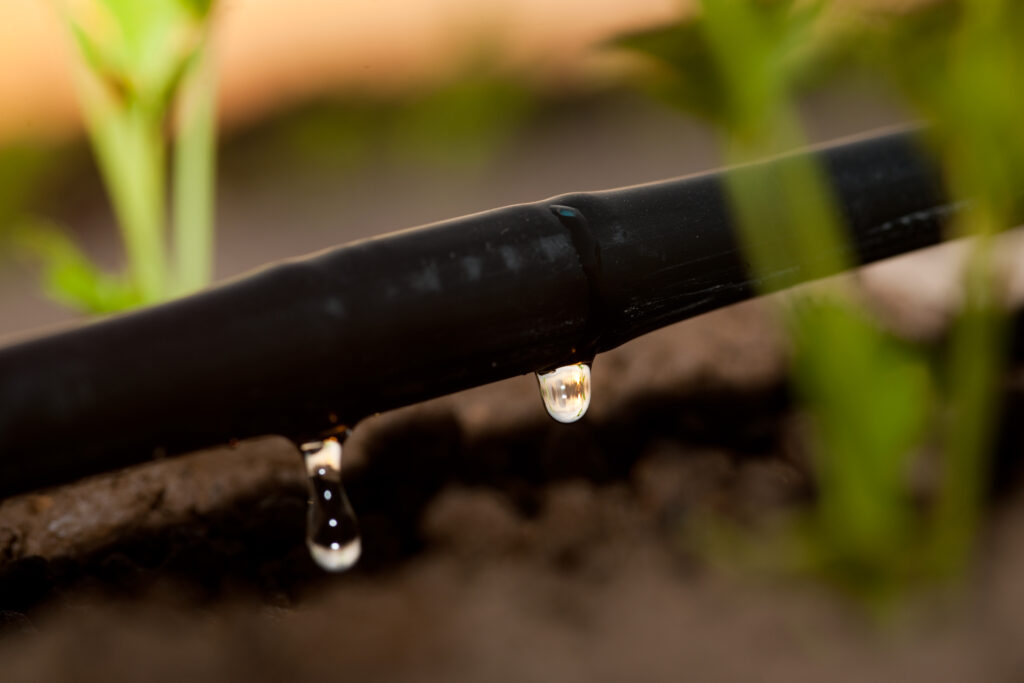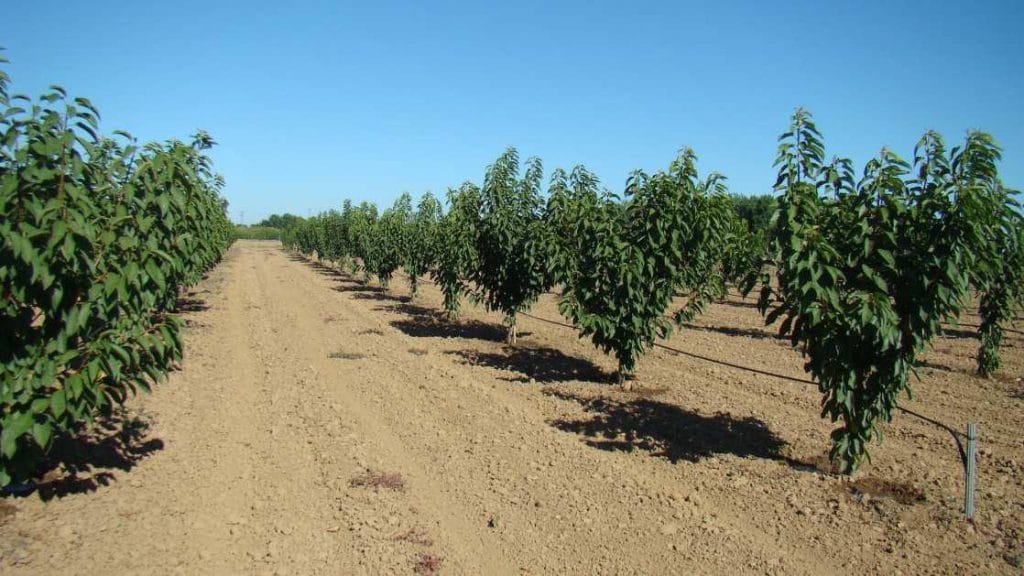
In Chilean fields, where cherry production is key, water is a fundamental resource. Since agriculture is an essential pillar of the country's economy, it is vital to understand how water impacts cherry tree growth and how we can use it responsibly.
Water plays a critical role in cherry cultivation, acting as the engine that keeps the plants in good condition and facilitates obtaining the nutrients they need. Mauricio Adasme, an agronomist at the Pontifical Catholic University of Chile and Head of the Las Garzas Agricultural Laboratory, points out: “In Chile, water is a critical resource for cherry cultivation. It is essential to understand how water affects the growth of these plants and how we can use it responsibly.”
This transport process takes place through two internal systems: the xylem and the phloem. The xylem acts as a one-way plumbing system that conducts water and minerals from the roots to the leaves, while the phloem transports nutrients produced during photosynthesis from the leaves to other parts of the tree, in a two-way, active plumbing system.
In the context of cherry cultivation in Chile, not all water sources are equal, and water quality plays a critical role. The NCh 1.333 standard establishes criteria for evaluating water quality, taking into account physical, chemical and biological aspects, especially in relation to irrigation. Adasme adds: “To ensure optimal and sustainable yield, we need to consider water quality as well as the choice of suitable rootstocks, such as Gisela 6, which are cherry varieties used to improve productivity and adapt the trees to different soil types, such as shallow soils.”
Lack of water in the soil can affect the plants' ability to transpire and carry out photosynthesis. When this occurs, the stomata close, photosynthesis stops and this reduces the availability of nutrients, affecting the growth of the fruits.
Between day 40 and the start of harvest, cherries undergo a significant increase in size. Water plays a vital role in this process, influencing the size of the fruit. The choice of rootstock is based on the type and quality of the soil. Dwarfing rootstocks such as Gisela 6 adapt well to shallow soils, while vigorous rootstocks such as Mazzard or Colt are ideal for deep soils.
The use of plastic mulches can reduce the need for frequent irrigation, provided that the water status of the soil and plants is carefully monitored. Controlled Deficit Irrigation (CDI), combined with mulches, can be applied after harvest, but should be avoided between flowering and harvest to prevent problems with fruit size, flavour and colour.
Irrigation should begin approximately 25 days after full flowering and be maintained as frequently as necessary so that soil moisture never falls below 40%. Irrigation scheduling should be based on accurate estimates of crop water requirements, taking into account factors such as soil type, climate, cultivation method, training system, and plant physiological status.
There are several methods for measuring soil moisture, such as gravimetric, tactile, electrical resistance and remote sensing. It is recommended to measure at multiple representative points to obtain an accurate assessment. Although all methods have their level of accuracy, the gravimetric method is the most reliable and is used to calibrate other equipment.
In the pursuit of agricultural excellence, water control and management become crucial allies for cherry growers in Chile, ensuring a fruitful future for this valuable crop.