In the world of agriculture, investing in orchards and crops Planting permanent crops is like sowing seeds for long-term success – think a decade or even up to 50 years! Planning is key, and having a solid business strategy that considers crop and variety, climate, terrain, water sources, and soil data is crucial.
Creating a reliable irrigation system is an important part of this plan. This involves preparing the fields, designing the system, and building proper drainage. The irrigation system covers everything, from controlling the water source to fertigation, the pipe network and drippers for each tree. Farmers who take good care of these systems see a significant impact on their profits.
Once trees are planted, some parameters are beyond the farmer's control, such as the climate and tree DNA. But assuming proper crop protection is in place, farmers can control factors such as pruning and irrigation-spraying to improve yields.
Irrigation systems usually have three main parts:
1. Head control (about 20% of the cost): This includes the pump, filter, valve, fertigation and automation, and can last about 15 years.
2. Pipe Network (about 50% of the cost): Mainly composed of PVC and HDPE, it can last about 50 years.
3. Drip Lines (about 30% of the cost): The part that feeds the trees, and the need for replacement depends on multiple factors, including water source, product quality, and maintenance.
Continuous monitoring of dripper uniformity and replacing them when necessary is important. Each tree is a production unit, and a reliable dripper is crucial for water and nutrient delivery.
Maintaining an even flow of water is vital. Coefficient of variation is a technical term that basically indicates that the water distribution should not only be consistent in total amount, but also evenly distributed between the drippers and the root system.
There are three main methods to evaluate the uniformity of your drip line:
1. Flow Monitoring: The system flow rate is measured with a flow meter, water samples are collected from different points along the drip line or blocks and the flow rate of the dripper is measured. These numbers are compared to what the system was designed for and the variation between drippers.
2. Pressure Measurement: Think of this like checking the blood pressure in your system or the tires on a car. A pressure gauge is an easy way to check your system: it's visual and inexpensive (it needs replacing when it clogs), and you should install all the blocks with the option to check the drip line from the end of the dripper.
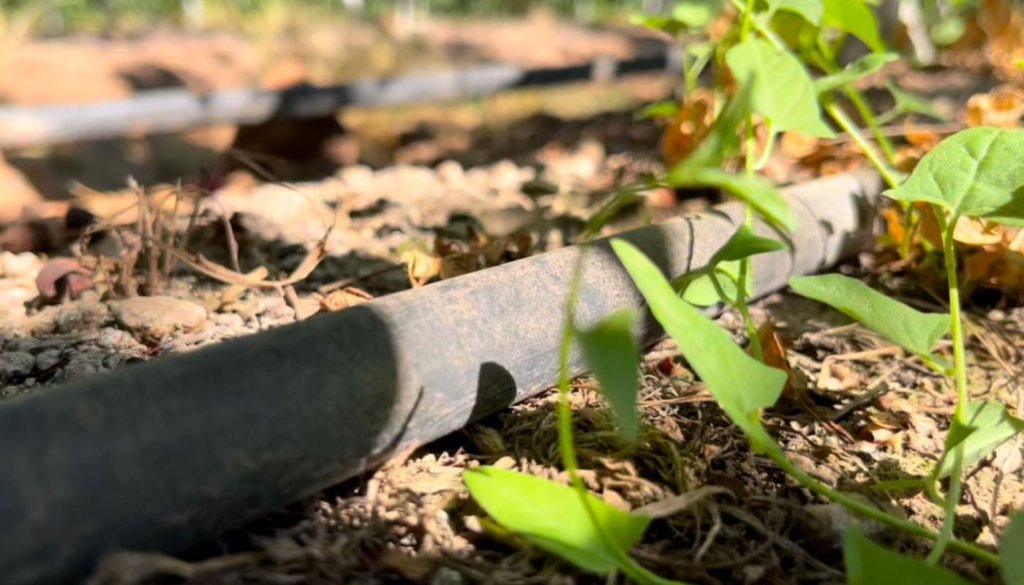
3. Visual Inspection: Take a good look at your drip line. Are there any leaks, clogs or damage? Check the emitter outlets; are they distributing water evenly? If you spot any problems, it's like giving your system a little TLC. Fix anything that's not right to keep the water flowing where it needs to go.
When deciding to replace drip laterals in your orchard, consider using shorter drip line emitter spacing. Shorter drip line spacing, with more emitters per tree, results in denser feeder and support roots for improved crop yields. Replacing drip line before the irrigation season begins is the ideal course of action, and Rivulis products are designed to seamlessly integrate with existing systems and other brands, ensuring growers have flexible and upgradeable solutions. The Rivulis design team is always ready to verify and assist with any drip system upgrades.