This tool, which prevents summer stress at key moments for the formation of flower buds and other important processes in the plant, is being increasingly used in cherry orchards in post-harvest. What is its mode of action and what factors should be considered when using it? We spoke about this with the specialist advisor in cherry production and founder of Avium, Carlos Tapia.
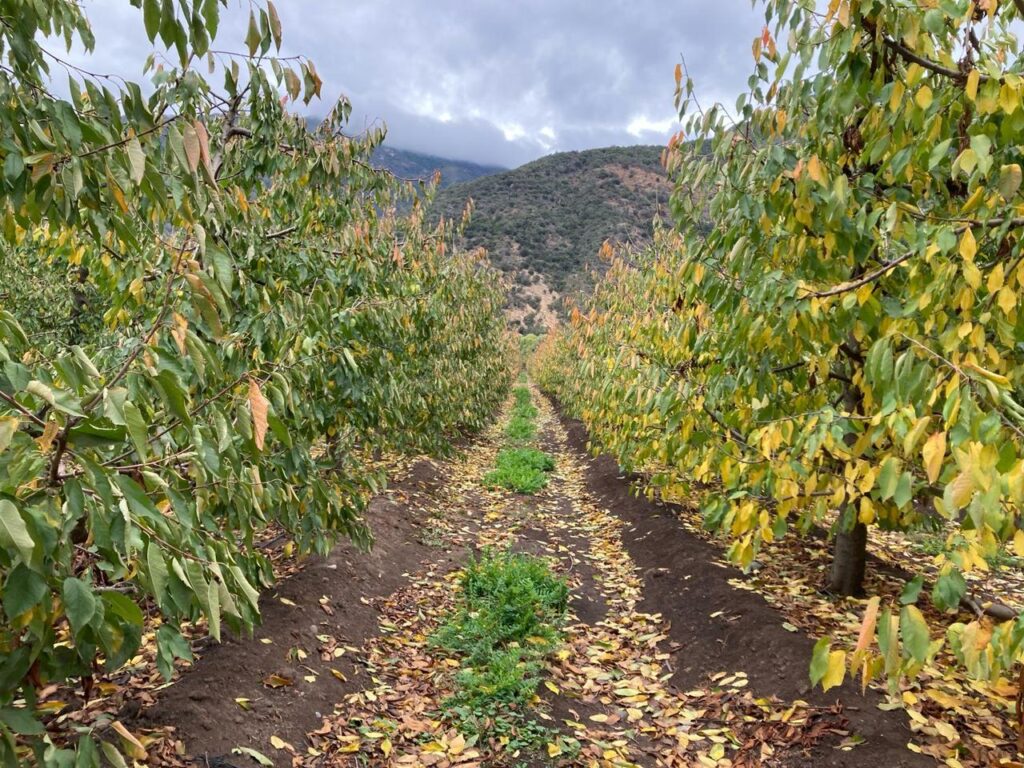
When several producers have already finished the harvest and the bulk of production is at its peak, it is extremely important to think about post-harvest and how to recover the orchards after a hard season of work.
In this context, the use of sunscreens on cherry trees is highly relevant and has been a widely studied topic in Chile and other parts of the world, analyses that have generally had a fairly consistent response in terms of their mode of action.

To begin, it is necessary to know what sunscreens do; they prevent, speaking from a physiological point of view, the premature closure of the stomata, which are pores invisible to the human eye that are on the underside of the leaves and that allow, among other functions, gas exchange with the atmosphere, allowing the cooling of the plant and the generation of sugars. In other words, these stomata are responsible for releasing water by the plant and in that process capturing CO2, and it is that CO2 the raw material of sugars, mainly in reserve at this time, through the process of photosynthesis. Therefore, it is a very important process with respect to this type of reserves.
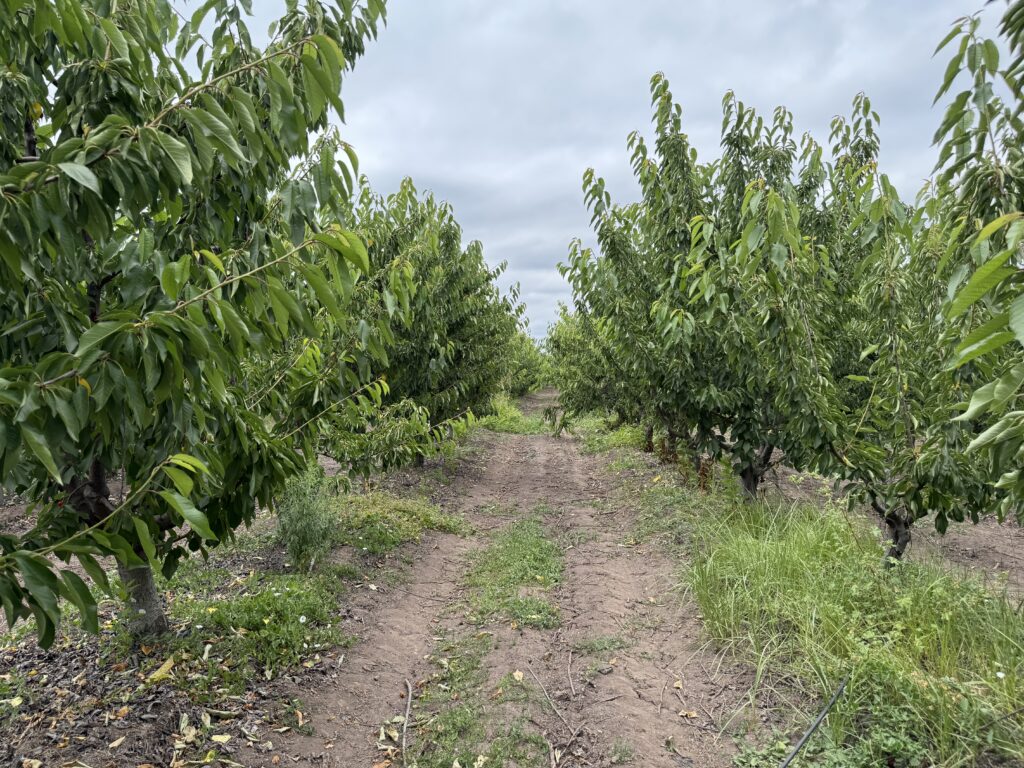
But in addition to knowing how they work, it is always important to keep in mind what factors should be considered when making the decision to apply sunscreens in a cherry orchard. In general, this type of tool to prevent thermal-hydric stress is used on weak rootstocks, less vigorous rootstocks or some less vigorous orchards (without wanting to frame only weak rootstocks within a range of vigor, since we can recognize in some areas orchards that by using vigorous rootstocks their response is weak). Do not forget that vigor is measured by the recovery of annual growth, that is, if an annual growth of over 50-70 centimeters is recognized, it can be said that we are facing a vigorous or balanced orchard. Do not confuse large orchards with vigorous orchards, because there may be a very voluminous giant orchard, but without vigor.
“We should not limit ourselves to the fact that this use of strategies to prevent this thermal and water stress is only done when low-vigor rootstocks are used. In this context, what rootstocks could respond to this need, obviously the Gisela series, including Gisela 5, Gisela 6, Gisela 12; although Gisela 12 is the most vigorous of the series, in many areas its use could be justified. We should not forget the direct relatives of these Gisela, which are the versions of sour cherry. So, although we have and can recognize different vigor statuses of sour cherry, we do recognize that there are a large number of sour cherry orchards that respond to less vigor than more vigor,” explained Avium Founder Carlos Tapia.
The Cherry Production Specialist Advisor added: “MaxMa Series: including MaxMa 14, MaxMa 60 and their direct “relatives”, some Mahaleb, Santa Lucia and Pontaleb. On the one hand, vigor is a determining factor for making this decision and on the other hand, we also believe that it is a determining factor, especially in seasons like this one with very hot areas or areas where we have a significant water deficit, and that it could be a help to weigh up this deficit.”
It is very important to note when considering the use of these products that the most important thing of all for the prevention of problems associated with abiotic stress is the efficient use and programming of irrigation. THERE IS NO other more foolproof method to avoid problems associated with water and/or thermal stress in plants. All sunscreen or filter treatments come together with these basic management practices in the development of the crop.

What do the records of recent years say about the use of sunscreens in Chile? The most common use is with 95 percent kaolinites, and there are four or five commercial names in the country.
“The use of these products ranges between 2.5 and 3 percent. And although there are some that have a lower label concentration, we believe that their use could also be effective and we have shown in recent years that orchards applied with this type of products maintain their leaves with a lower temperature throughout the day, at the different times that we have taken measurements, also adding to stomatal flow measurements where positive differences are always recognized after midday, showing greater stomatal conductance in treatments with sunscreens.
We have also been learning about colourless sunscreens, taking into account that they are interesting tools for pre-harvest applications. In our preliminary studies we can recognise that some of them have presented interesting results in preventing direct damage to the fruit, such as dehydration of pedicels, sunstroke on fruits and even improving quality indicators in the post-harvest. Although the formulation is very different from conventional sunscreens, they are also an alternative for the post-harvest period.
Avium's Research and Development Department has carried out a series of tests regarding the use of sunscreens on cherry trees; about five or six seasons ago, they incorporated certain additives or ingredients to these kaolinite applications that would improve or support the use of kaolinite, using the biochemical method of thermal water stress control. They carried out tests with algae extracts of the type Ascophyllum nodosum, and even some amino acids.
“The results have been super consistent, the orchards with kaolinite alone lower the leaf temperature compared to the control. And when we incorporate some additive to these kaolinites that allows us to biochemically improve this prevention of stress, the temperature is lowered even more or the temperature of the leaf is kept cooler, since the concept is not to lower the temperature, but to let it not increase, and thus prevent premature stomatal closure. We have understood over time that not only Ascophyllum nodosum could do this job, but also products that have folcisteine in their composition or also the use of some amino acids that mainly in their composition could highlight proline, which is also directly linked to the prevention of thermal hydric stress”, said Carlos Tapia, Founder and Technical Director of Avium.
Regarding when to start applying sunscreen in orchards, ideally immediately after harvest and perhaps up to a week after harvest.
“Ideally, we should repeat this strategy or these applications every 25 to 30 days. That is, we can do two applications in the spring season or late spring and summer, and with that we have detected and studied that there is a better temperature of the leaf blade compared to the control. And consistently, there is a better operation of carbon reserves in the shoots measured in winter. That is, the orchards and the treatments that we have carried out by applying some type of sunscreen, when measuring reserves in shoots, which reserves? Total nitrogen, total protein, amino acids, some amino acids and starch. When we have measured these reserves in winter, we consistently find that there is an increase in starch in the shoots, but not the other reserve ingredients.” Tapia warned.
These treatments to control body temperature, such as sunscreen, allow the stomata to remain open for longer, and by remaining open for longer, they have the possibility of making a greater gas exchange, capturing more CO2 and transforming it into sugar. Thus, when the sugar that represents the largest reserve within the plant, which is starch, is measured, there is a greater presence of it.
“We believe that it is an important and interesting strategy and that we will continue to study it. We have more research underway, because today there is also a tendency to see what possibility we have of incorporating these same pre-harvest strategies, but with some types of sunblocks that are colorless, in order to be able to apply them pre-harvest and in less vigorous orchards that are perhaps later in the season, so that we can prevent the effect of thermal and hydric stress before the fruit is harvested,” said Carlos Tapia.
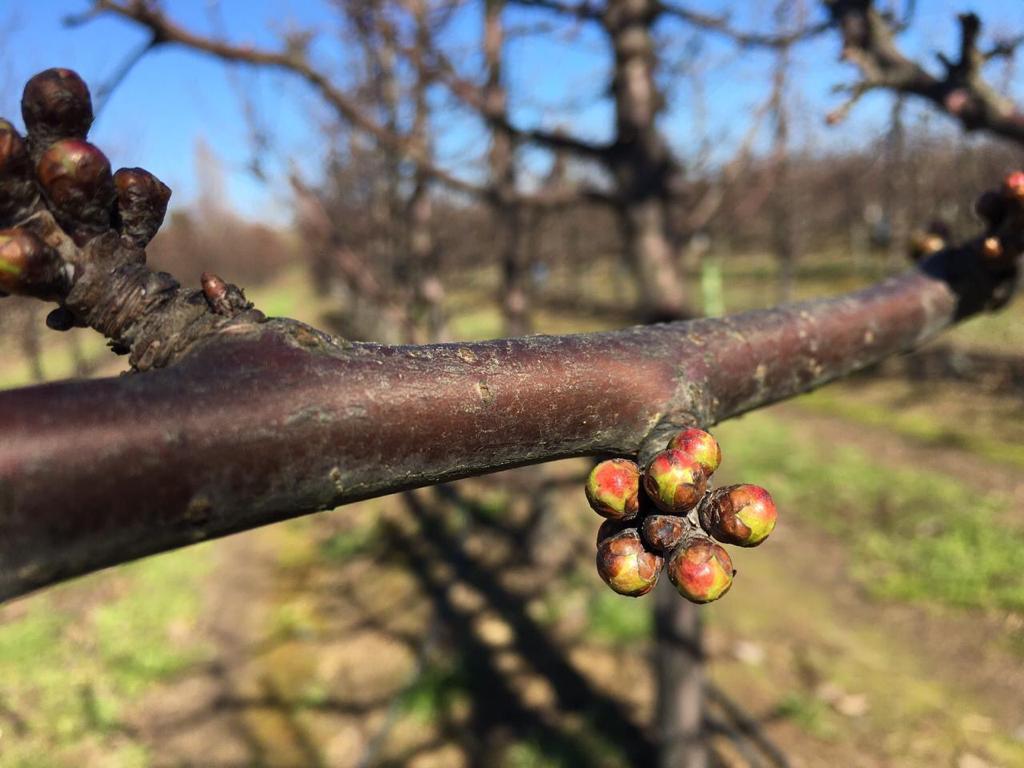
It should be considered that the month of January corresponds to the period of floral differentiation in the central zone, therefore, it is of great importance that during this period the plants are in the best conditions so that this physiological process, which is the formation of flower buds, occurs when the plant has a balance in terms of water, heat and metabolism.