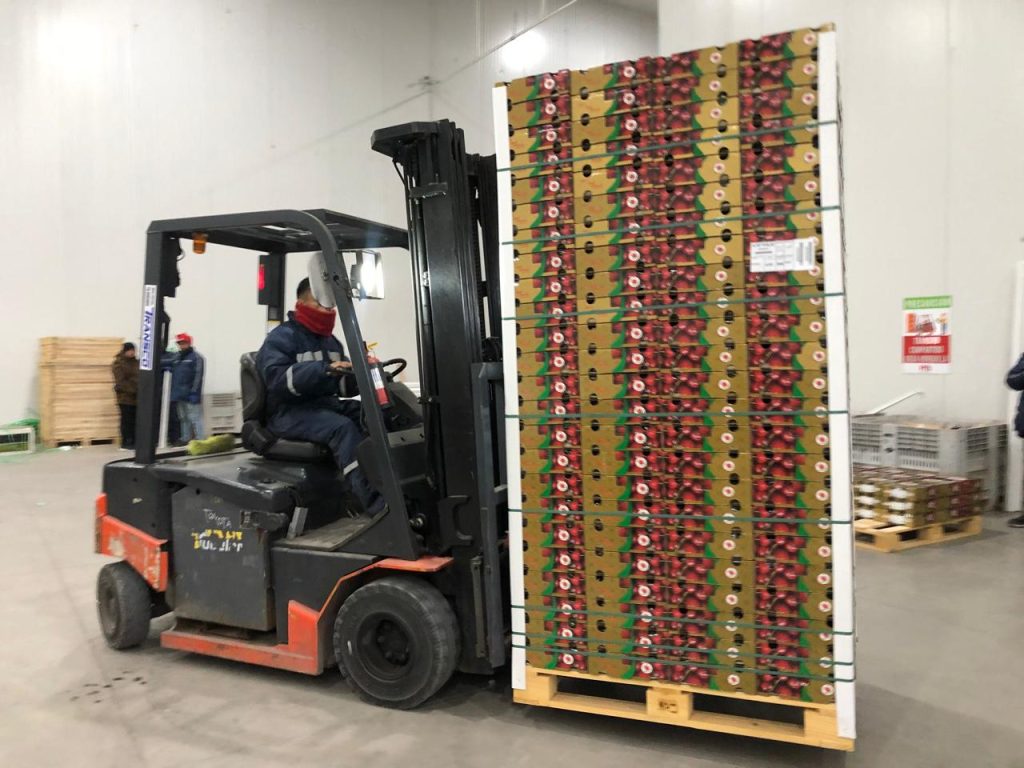
Since 1995, Chile has been declared a fruit fly-free country; this constitutes a great comparative advantage for the agroindustry, since it is the only country that holds this title in the American continent.
However, there is the Fruit Fly Program, through a National Sensitive Detection System, in order to prevent this pest from establishing itself in the country. This has made it possible to detect the presence of specimens and take different measures to prevent their spread and the establishment of the pest as such.
Currently in our country there are 6 active fruit fly campaigns; in Ovalle, Valparaíso, Los Andes (El Sauce), San Esteban, Lo Espejo, San Bernardo and Chimbarongo. This involves a series of controls by the SAG, an organization in charge of, among other tasks, phytosanitary protection. In addition to regulations affecting orchards and packing plants.
In previous notes, the impact of active campaigns on cherry production has been analyzed, mainly what happened in Ovalle during the last season; however, on this occasion, emphasis will be placed on the scenario that exporters will have to face, considering that “dirty” fruit, that is, fruit produced in areas with fly quarantine, cannot go to packing plants in “clean” or non-quarantine areas; but fruit from clean areas can go to processing lines in “dirty” and “clean” sectors. What will the industry do about this?
Dirty or clean area?
The exporter Fruttita, located in the Peor es Nada sector, is in the so-called "dirty zone"; Víctor Maroto, commercial manager of the company, explains in detail the situation and how they will face the new cherry season.
«Fruttita is currently in a dirty zone, within 7.2 km., with this we must implement certain safeguard measures for the reception of the fruit, everything that is processed within the plant must be exported with cold treatment, which will imply a higher cost for the producers and the exporter. In our case, the biggest restriction of being within 7.2 km. is that we lose markets such as Taiwan, Korea, among other markets.", Maroto said.
Among the actions that have had to be implemented is the exchange of lines with other plants; decisions that other large plants, such as Garcés, have also had to take.
«In order to be able to pack fruit from clean areas early and to be able to do aerial transport, we have exchanged processes between clean and dirty areas; in the case of clean fruit in the mid and late season, we have the possibility of receiving fruit at our plant and the exporter must cover the extra costs that may be involved in dirtying the fruit, since they have not been authorized by the Chinese authorities, with whom we are working together with SAG, Frutas de Chile and both governments, in order to reach an agreement on these issues, which up to now has not had any changes to what has already been agreed,» said Victor Maroto.
Exportadora Blossom is another company that has had to take measures due to the presence of fruit flies.
«Indeed, we have fruit in clean and dirty areas; about 70 percent of our orchards are in clean areas and 30 percent in the dirty area of Chimbarongo, and our plant in Teno, at the La Montaña crossing, is within this ring of Chimbarongo. This happened in May, the detection of the fly, and the truth is that we waited another two months, waiting for the Chinese customs to find out if there were going to be bubble plants, I mean if there were going to be plants within the clean area that were going to receive dirty fruit or plants within the dirty area that could receive clean fruit, and as the Chinese customs informed us that this was not going to happen, until now, what we did was with a plant in Rengo, which is clean, take services for our clean fruit, for that 70 percent and in turn the owners of that plant that had dirty fruit, took the service back from us,» explained Alfonso Frías, general manager of Blossom export company.
Another question that has arisen in this new scenario facing cherry exports is whether or not to dirty clean fruit; in this case, the fruit that is dirty must be taken out of the country with cold treatment, which increases costs.
«At some point we talked to a large company that needed a lot of processing capacity for dirty fruit and they have all their plants clean. At some point we had the opportunity to change plant by plant, we would give all our processing capacity to that company and we would take a clean plant to process our fruit, but since we also needed some dirty processing in our plant, that 30 percent, finally that did not happen and today we are mixed, we had to open to two plants.» added Frias.
Ovalle and the fruit fly
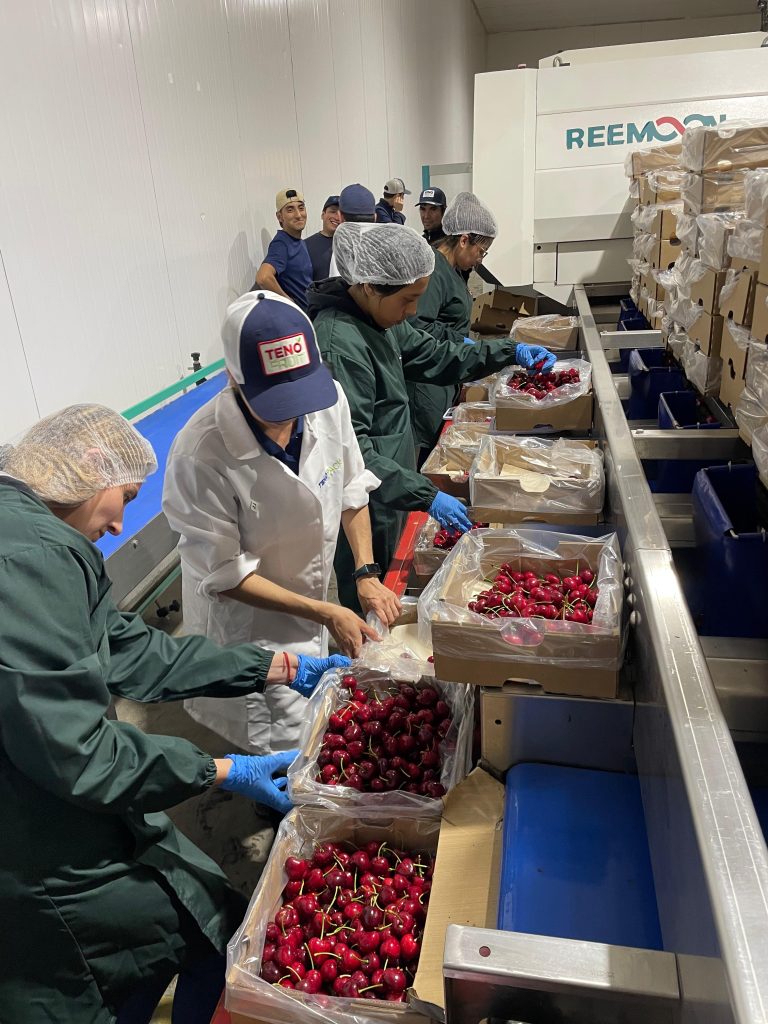
During the 2023-2024 cherry season, Ovalle had to face a quarantine due to the fruit fly, which meant that certain producers had to eliminate their fruit and that others had to subject their production to cold treatments, or look for new markets other than China to ship their cherries. Since then, the area remains in quarantine and is constantly monitored by teams from the Agricultural and Livestock Service, SAG.
«The last capture was in April and we should already be living the second cycle or the second theoretical biological generation. With three generations, we should consider that the fruit fly eradication campaign has been satisfactory and after this third complete cycle, the quarantine should be lifted. That is what is established. According to the projections, given that the cycles in winter are longer due to the temperatures, it is projected that if there are no new captures from April onwards, we should have the release at the end of October, so that in November it will be completely released.», explained Jorge Astudillo, production manager at Agroindustrial Valle Arriba, Ovalle.
«Obviously we are looking for all commercial alternatives to take our fruit if China is closed; all those outside the 7.2 km radius can go to Korea for example, therefore all the System Approach systems that exist for that market are already resolved in some way, the fields have already been registered and should have the trap system to monitor these pests that the Korean market in particular requires; but there is also the possibility of going to other markets such as Europe or Hong Kong itself, the USA, Mexico, these are the destinations that could potentially receive the fruit that potentially cannot go to China,» added Astudillo.
Companies in Ovalle focused mainly on registering their producer codes for other markets, and in the orchards themselves, they continue with the management to control the fruit fly, so that this is already part of the phytosanitary control in the different plots.
Learn more about active fruit fly and control campaigns at https://www.sag.gob.cl/ambitos-de-accion/mosca-de-la-fruta