The Agroclimatological Report has two objectives:
1.- Analyze the current development of the El Niño event autumn 2024.
2.- Thermo-pluviometric-evapotranspiration projections, February 2024. Projection and development of the El Niño 2024 event.
Projection and development of the El Niño 2024 event:
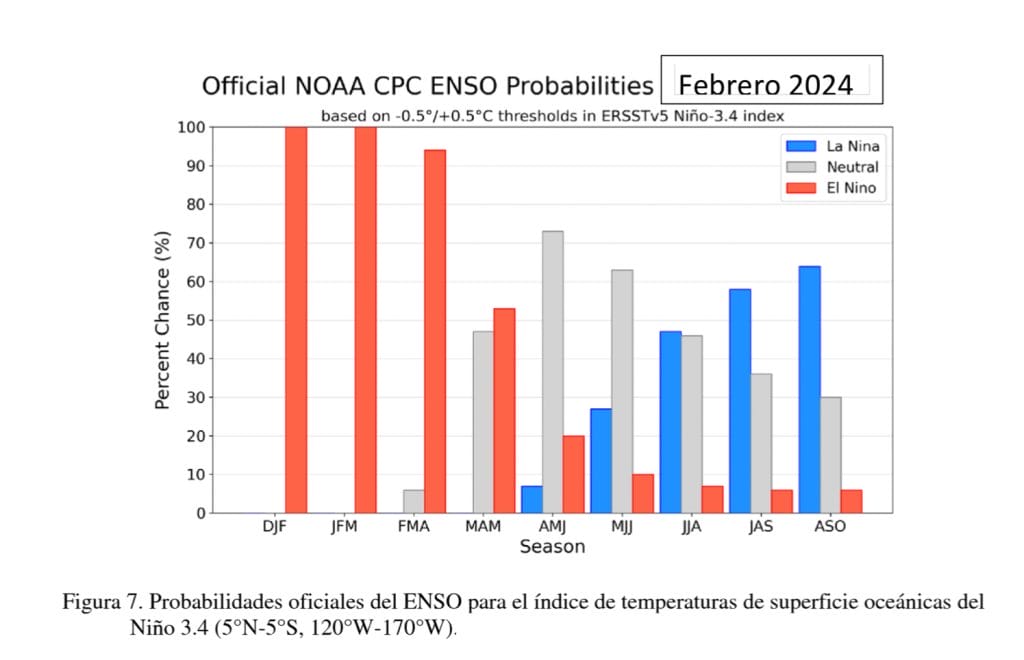
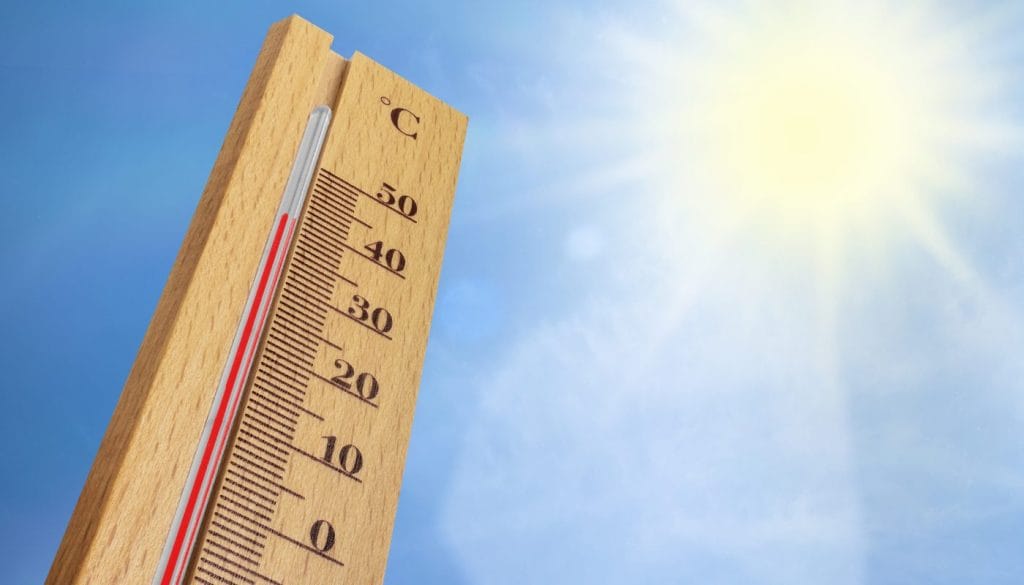
The forecasts of the statistical and dynamic models estimate that the warm El Niño event will continue to be present during February and March, with a probability of 100 and 95% respectively; the above will contribute to the presence of heat waves, above 34° C and extreme maximum temperatures that on some days can register 37° C. The above will contribute to the evapotranspiration rates being able to fluctuate between 50-60 mm per week. We must remember that during January there were at least 3 heat waves and the maximum temperatures ranged between 37 and 40° C, in Maule. During February, the El Niño event will continue to contribute to extreme heat, defined when the daily maximums are equal to or greater than 35° C. In these circumstances it is advisable to be aware of the dryness of the soil and to have more frequent irrigation if necessary. Water-thermal stress must be avoided and the roots must not reach the wilting point, due to heat. The El Niño event will culminate in the fall of 2024. It is not yet known in which specific month the cold La Niña event, which contributes to winter rainfall deficits, would begin. There is currently a 60% probability that it will begin in the month of July.
Thermo-pluviometric projections January 2024:
In the case of the province of Curicó, the probability of rain during February is 15.1%. According to the statistical average 1991-2020, only 2.2 millimeters of probable rain should fall in this month. Thermo-pluviometric statistics indicate that February is a stable month in terms of heat (maximums above 33° C and minimums between 12 to 14° C). New waves and extreme heat events are expected in the province of Curicó in the following weeks.
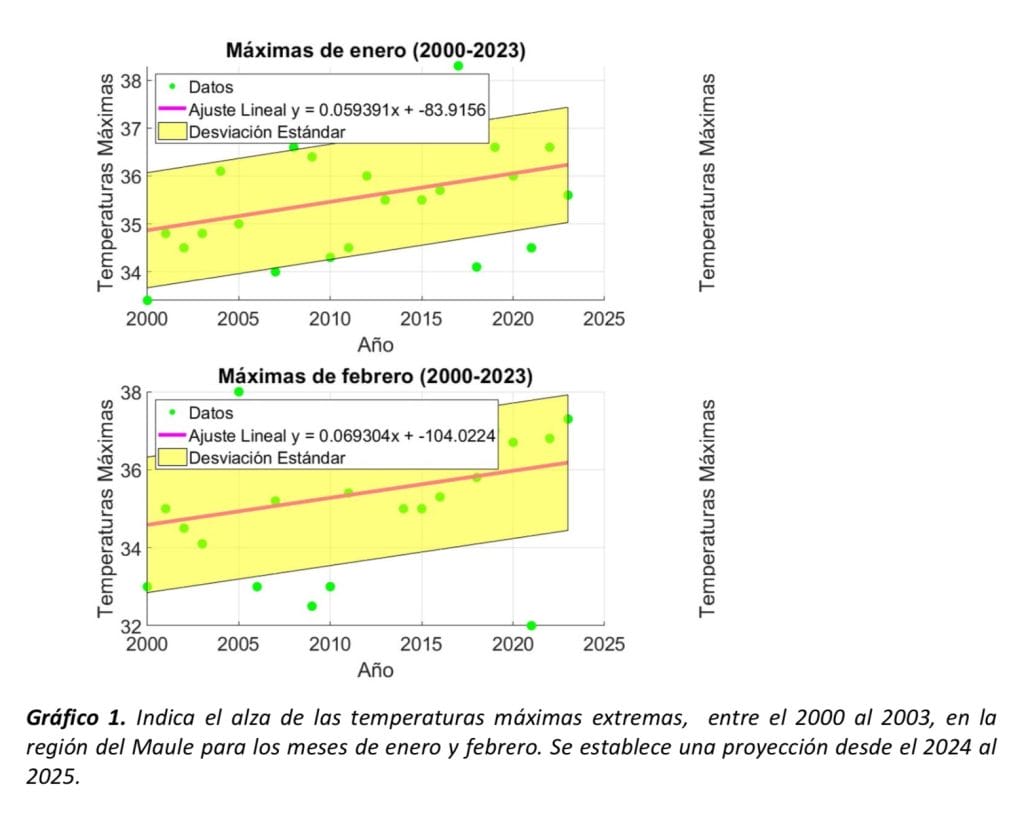
According to graph 1, a progressive and sustainable increase in daily extreme maximum temperatures is being recorded. This indicates that in each future summer it will be usual to measure values of 37°, 38° and 39°C during these months, as already happened during January 2024. Studies are also showing that in rural areas temperatures can be up to 2°C higher than at urban weather stations. These data are also valid for December. However, the most extreme hot events are occurring in January and February. This indicates that daily evapotranspiration rates will increase. Taking care of water will be the best strategy to face this climate change, especially in summer.